
Low Power Wireless Sensors: The Shift to Zero-Maintenance Decade-Long Monitoring
The biggest operational challenge in long-term structural monitoring isn’t sensor accuracy or wireless range, it’s maintenance. Every time a technician visits a remote bridge, tunnel, or industrial tower to replace a sensor battery, it costs money, causes disruption, and in hazardous locations, introduces safety risks.
Low power wireless sensors have changed this equation entirely. By consuming so little energy that a single small battery lasts a full decade, modern sensor networks operate autonomously through extreme temperatures, dynamic loads, and years of continuous data collection without a single maintenance visit.
Resensys SenSpot™ sensors support both non-rechargeable and rechargeable battery configurations. With non-rechargeable batteries, average operational life reaches 10 years. When paired with rechargeable batteries and solar chargers, operational life extends beyond 10 years, making truly permanent, infrastructure-grade deployments a practical reality rather than a theoretical claim.
This blog examines how ultra-low power sensor networks work, what makes different sensor types achieve decade-long battery life, and how engineers are deploying these systems across structural and industrial monitoring applications.
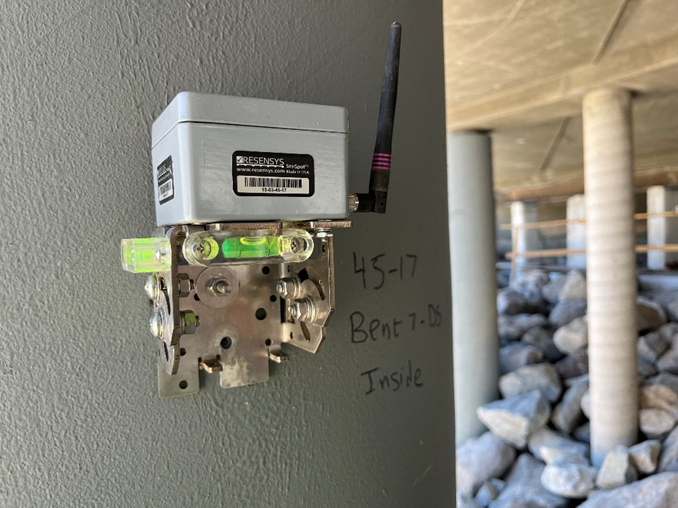
Wireless Tiltmeter
What Makes a Sensor Truly “Low Power”?
The term “low power” gets used loosely in the sensor industry. In practice, meaningful low power performance requires all three core subsystems- sensing, processing, and communication- to operate efficiently, not just one.
Three pillars of ultra-low power design:
1. Sensing efficiency: A low current sensor keeps measurement circuits active only during actual data acquisition, typically a few milliseconds per sampling cycle. Continuous sensing circuits consume orders of magnitude more power than duty-cycled alternatives. Precision sensing elements, whether measuring strain, temperature, acceleration, or tilt, must deliver accurate results from brief, low-energy excitation rather than requiring sustained power supply.
2. Processing efficiency: Microcontrollers in low power sensors operate primarily in deep sleep states, waking only to acquire measurements, apply calibration, and prepare transmission packets. Modern microcontrollers draw under 1 microampere in sleep mode versus several milliamperes during active operation. Minimizing active time while maintaining data integrity defines processing efficiency.
3. Communication efficiency: Wireless transmission consumes more instantaneous power than any other sensor operation. Low power wireless sensors minimize transmission frequency, packet size, and duty cycle while maintaining reliable data delivery. IEEE 802.15.4 protocols support these requirements through short bursts of low-power transmission rather than continuous radio operation.
When all three subsystems operate efficiently together, a wireless sensor running on a single non-rechargeable battery achieves a 10-year average operational life. With rechargeable batteries and solar chargers, this extends to 10+ years, transforming field economics completely and eliminating the recurring cost cycle of periodic battery replacement programs.
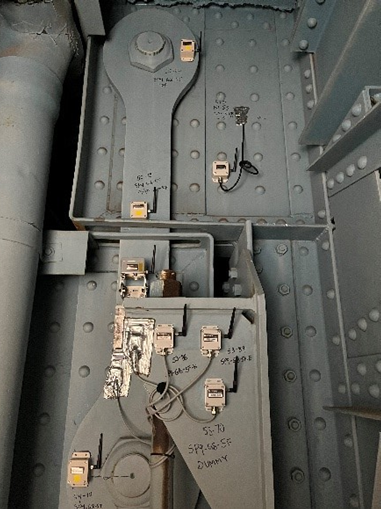
Wireless monitoring system at a hanger of the Severn River Bridge on Annapolis By Pass
How Low Power Wireless Sensor Networks Work
A low power wireless sensor network consists of three primary tiers working together to collect, transmit, and present structural data.
Sensor nodes acquire measurements at configured intervals ranging from seconds to hours. Between measurements, nodes enter deep sleep states consuming microamperes. When a measurement interval arrives, the node wakes, acquires data, transmits a packet wirelessly, and returns to sleep, the entire active cycle lasting under one second.
Data Acquisition Gateways receive wireless packets from sensor nodes within communication range, up to 1 kilometer in open environments. Unlike battery-powered sensor nodes, gateways typically connect to AC power or solar supplies, enabling continuous operation and uplink data transmission via cellular, ethernet, or satellite connections.
For remote deployments where AC power is unavailable, Resensys gateways can be paired with solar charger systems, making the entire monitoring network, from field sensors to data collection gateways, completely self-sustaining without grid power dependency.
Cloud or local software platforms collect gateway-forwarded data, store historical records, display real-time conditions through dashboards, and generate automated alerts when measurements exceed configured thresholds.
This architecture distributes power requirements appropriately, battery constraints apply only to field sensors where cable power is impractical, while gateway and software tiers use reliable power sources.
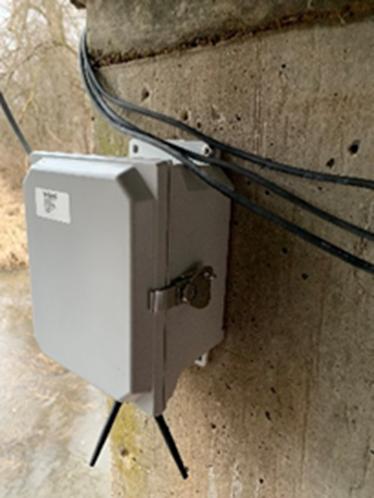
SeniMax Gateway for data acquisition
Low Power Sensors Across Measurement Types
Low Power Vibration and Accelerometer Sensor
Vibration and acceleration monitoring presents unique low power challenges because dynamic events occur unpredictably, requiring either continuous monitoring or intelligent trigger-based sampling.
Advanced low power accelerometers solve this through event-triggered architectures. A threshold detector circuit, consuming microamperes, monitors acceleration continuously. When movement exceeds a configurable threshold, the circuit wakes the main processor for high-rate data acquisition, capturing the event waveform before returning to sleep.
This enables a low power vibration sensor to capture every significant structural dynamic event, passing trucks on bridges, seismic activity, equipment operation, while consuming minimal energy during quiet monitoring periods. Sampling rates up to 100 Hz capture fast-changing events while configurable triggering thresholds adapt to specific application requirements.
Low Power Wireless Temperature Sensor
Temperature monitoring is inherently suited to low power operation because temperature changes slowly, requiring only infrequent measurements. A low power temperature sensor acquires readings every few minutes to every hour, with the sensing element powered only during the brief acquisition period.
Low power wireless temperature sensors in structural monitoring serve dual purposes: measuring ambient conditions affecting structural behavior and compensating other sensor measurements for temperature effects. Strain readings require temperature compensation to distinguish thermal expansion from mechanical loading, making co-located temperature sensing a standard feature in multi-parameter wireless nodes.
Low Power Wireless Strain Sensors
Strain monitoring on structural members tracks stress and fatigue accumulation over years of service. The low power challenge involves maintaining sub-microstrain measurement precision while keeping power consumption low enough for decade-long battery operation.
Advanced designs use precision analog front-ends that power up briefly during each measurement cycle, acquire stable readings within milliseconds, then shut down completely. This achieves 1-microstrain resolution typical accuracy while consuming average power in the low microampere range, a balance that makes decade-long autonomous operation practical in real field conditions.
Wireless Tilt and Displacement Sensors
Low power MEMS-based tilt sensors monitor structural inclination with precision reaching 0.0003 degrees. Wireless displacement sensors track crack growth and structural movement with 0.01mm resolution. Both sensor types share the same fundamental low power architecture, brief measurement cycles with deep sleep between acquisitions, achieving decade-plus battery life when properly configured.
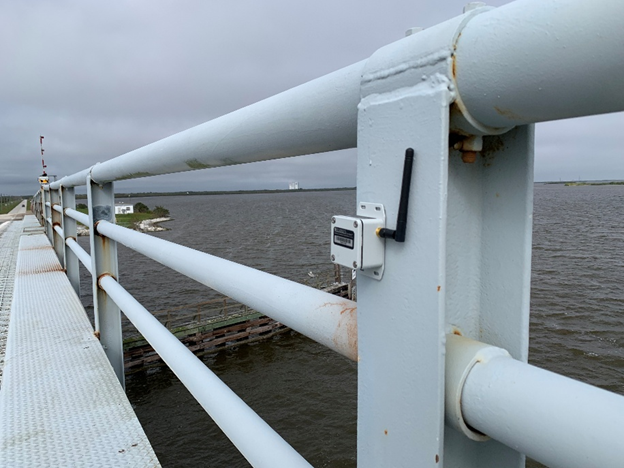
Low power Wireless Accelerometer
Real-World Impact: Zero-Maintenance Monitoring
- Eliminated access requirements: Sensors mounted inside bridge box girders, at dam faces, or on tower structures often require lane closures, scaffolding, or specialized equipment for access. Decade-long operation means this access requirements occur perhaps once over a monitoring program’s lifetime rather than annually.
- Reduced lifecycle costs: A bridge monitoring installation with 30 sensor nodes cost too high per battery replacement visit, including labor, travel, and traffic control. Zero maintenance over 10 years eliminates multiple such interventions, savings that often exceed initial system costs.
- Improved data continuity: Battery replacement visits interrupt monitoring, creating data gaps when sensors may have been capturing developing structural trends. Uninterrupted operation provides complete historical records for structural analysis and condition assessment.
- Safety improvements: Removing maintenance access in hazardous locations like high bridges, active industrial facilities, nuclear infrastructure reduces personnel exposure to risk, significant in any safety management program.
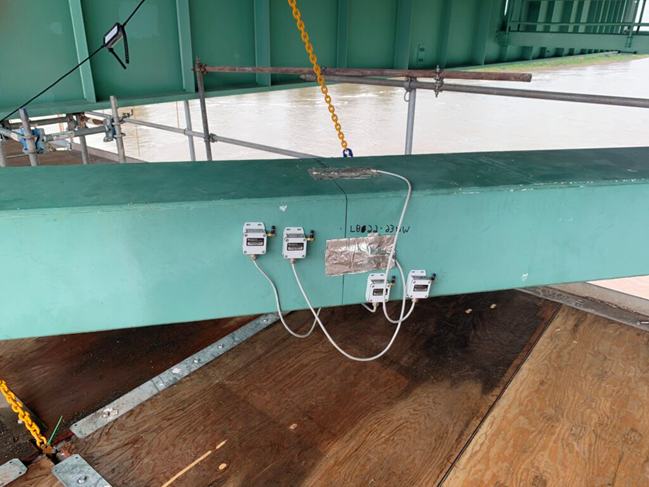
Installed Wireless Strain Gauge Sensors on I-40 Bridge
Applications in Structural and Industrial Monitoring
- Bridge structural monitoring: Strain sensors on fracture-critical members track fatigue accumulation from traffic loading. Wireless tilt sensors detect pier settlement. Low power vibration sensors capture dynamic responses under vehicle loads. Combined, these measurements support load rating analysis, fatigue life estimation, and early identification of developing structural issues.
- Building health assessment: Long-term settlement monitoring on foundations, structural load tracking in critical columns, and environmental condition monitoring throughout occupied facilities benefit from low power wireless deployment. Building access constraints make wireless installation practical compared to wired alternatives.
- Dam and water infrastructure: Dams require monitoring over decades at points often inaccessible after initial installation. A low power wireless sensor network installed during construction or major rehabilitation operates continuously throughout the structure’s service life, exactly the scenario these sensors were designed for.
- Industrial facility monitoring: Low power vibration sensors on rotating equipment provide predictive maintenance data. Wireless strain sensors on structural frames detect overloading or developing fatigue damage before failure occurs.
- Wind turbine foundations: Foundation stability monitoring operates through extreme environmental conditions, temperature swings from -40°C to +65°C, continuous vibration, moisture exposure. In these off-grid installations where AC power is often unavailable, rechargeable battery configurations with solar chargers provide 10+ years of continuous operation, making wireless sensors the practical choice over cabled alternatives that require expensive power infrastructure.
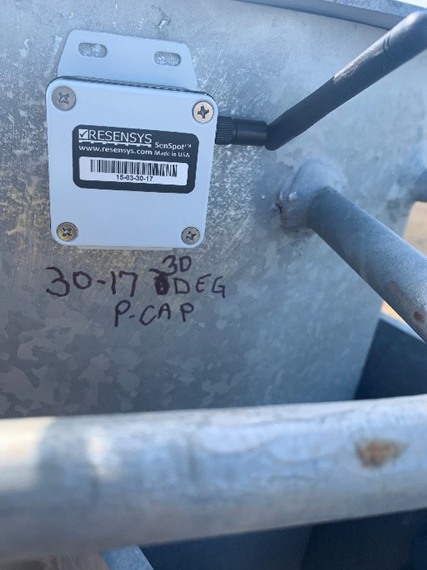
Wireless Accelerometer(3D Vibration) SenSpot™ installed at a turbine structure
Selecting the Right Low Power Wireless Sensor
- Battery life under actual conditions: Request documented battery life estimates matching your application’s measurement frequency, transmission rate, and temperature range. Field performance data from comparable deployments provides more reliable projections than theoretical calculations.
- Non-rechargeable vs. rechargeable configurations: Evaluate which battery type suits your deployment. Non-rechargeable batteries deliver 10-year average life with zero maintenance overhead, ideal for enclosed or difficult-access installations. Rechargeable batteries paired with solar chargers extend this to 10+ years and suit open-air installations where sunlight is consistently available, offering indefinite theoretical operation in well-designed systems.
- Measurement precision without compromise: Confirm sensor specifications meet your requirements: strain resolution in microstrain, temperature accuracy in degrees Celsius, tilt precision in degrees or arc-seconds, vibration sensitivity in mg or g.
- Environmental protection ratings: Outdoor infrastructure monitoring requires sensors rated across temperature extremes from -40°C to +65°C with IP67 or higher protection. Verify these ratings reflect tested performance rather than theoretical design targets.
- Wireless range under realistic conditions: Structural steel and reinforced concrete attenuate wireless signals significantly open-air 1-kilometer range often reduces to 100-300 meters through structures. Understanding actual range prevents coverage gaps after installation.
- Long-term calibration stability: Decade-long deployments require sensors maintaining calibration accuracy without field adjustment. Factory calibration documented against traceable standards and specified drift characteristics help predict long-term data quality.
Conclusion
Low power wireless sensors have eliminated the primary practical obstacle to long-term structural health monitoring, the maintenance burden of periodic battery replacement, recalibration, and site visits.
With non-rechargeable batteries delivering 10-year average life and rechargeable solar-charged configurations extending this further, Resensys SenSpot™ sensors offer flexible deployment options matching the access, environmental, and operational requirements of virtually any infrastructure monitoring program.
By combining ultra-efficient sensing, processing, and communication subsystems, modern low power wireless sensor networks operate continuously for a decade or more on battery power alone, providing uninterrupted data collection across the full monitoring program duration.
For bridges, buildings, industrial facilities, and infrastructure requiring years of continuous assessment, these sensors transform monitoring from a maintenance-intensive program into a genuinely autonomous system. The result is better data continuity, lower lifecycle costs, and reduced personnel exposure in challenging environments.
Ready to Deploy Low Power Wireless Monitoring?
Ultra-low power sensor networks deliver decade-long autonomous operation across diverse structural and industrial monitoring applications.
Request a Quote and discuss your monitoring requirements with our engineering team
FAQ’s
Q: What is the difference between non-rechargeable and rechargeable battery options for wireless sensors?
Ans: Non-rechargeable batteries deliver a 10-year average operational life with zero maintenance overhead, ideal for enclosed or inaccessible installation points. Rechargeable batteries paired with solar chargers extend this to 10+ years, suited for open-air installations where solar exposure is reliable. The rechargeable option does not require battery replacement entirely in well-designed solar-charged systems, making it the preferred choice for permanent long-term monitoring programs.
Q: Does low power operation compromise measurement accuracy?
Ans: No, precision measurement circuits activate fully during brief acquisition windows, then power down completely. Measurement quality depends on circuit design during the active period, not on continuous power consumption.
Q: What measurement interval maximizes battery life without losing important data?
Ans: For slow-changing parameters like foundation settlement, hourly intervals work well. For dynamic events like traffic loading, event-triggered high-rate sampling captures transients while maintaining low average power consumption.
Q: Can low power wireless sensors be relocated after installation?
Ans: Self-adhesive mounted sensors can typically be removed and reinstalled at new locations. Flange-mounted sensors require drilling and are generally treated as permanent installations.

About Author

Matt
-
 Resensys continoius strain monitoring SenSpot sensors for load-rating of Route 12 bridge over Mill Brooke, Connecticut
On the warm early fall morning of the 22nd of September, 2015,
-
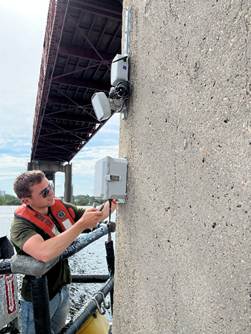
 Scour Critical Bridge Case Study: Wireless Tilt, Wireless Water Level Sensors and Camera on Continuous Span Concrete Girder Bridge
Monitored variables and members: piers tilt (incline; roll and pitch), water level