
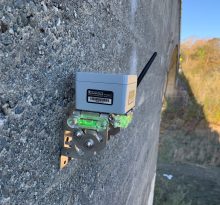
It’s 2:17 a.m. on a Tuesday. A bridge maintenance supervisor’s phone lights up with a quiet alert – not a full-blown emergency, but something subtle. A wireless tilt sensor on Pier 3 has detected a 0.08-degree shift
Wireless Tilt Sensor Archive
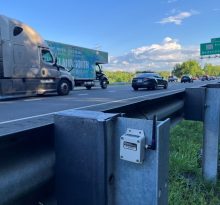
Digital Twins for Structural Health Monitoring: What Every DOT and Infrastructure Engineer Needs to Know Right Now
Imagine if your bridge could quietly tell you it’s starting to get tired – not after a crack shows up during an inspection, but weeks or months earlier, while there’s still time to act. That’s exactly what
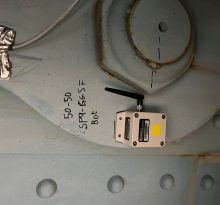
Tilt Sensor vs Strain Sensor: Which One Actually Tells You What’s Wrong with Your Infrastructure?
With more than 623,000 bridges across the U.S. and a $191 billion bridge rehabilitation funding gap, infrastructure owners can no longer afford to rely solely on what’s visible during routine inspections. The real question has shifted from

How Engineers Are Tracking Bridge Fatigue in Real Time Without Complex Wiring?
Many bridges across the United States are now operating far beyond their original design expectations. Increased freight traffic, temperature fluctuations, corrosion, and repeated vibration cycles continue to accelerate structural fatigue across aging infrastructure. Traditional inspection methods were
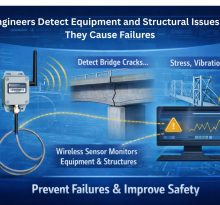
How Engineers Detect Equipment and Structural Issues Before They Cause Failures
Engineers today rely on continuous, data-driven methods to identify structural issues and risks long before visible damage appears. By using wireless condition monitoring, they can track structural behavior and equipment performance in real time, detecting early warning

Integrating AI with Wireless SenSpot™ Sensor Data
Infrastructure doesn’t fail overnight. A bridge pier that collapses, a building column that buckles, or a dam that shows unexpected displacement, these failures trace back to gradual degradation that went undetected or unmeasured for years. The problem
Low Power Wireless Sensors: The Shift to Zero-Maintenance Decade-Long Monitoring
The biggest operational challenge in long-term structural monitoring isn’t sensor accuracy or wireless range, it’s maintenance. Every time a technician visits a remote bridge, tunnel, or industrial tower to replace a sensor battery, it costs money, causes

Structural Health Monitoring Trends Using Industrial Wireless Sensors
As infrastructure systems grow larger, older, and more complex, traditional inspection methods are no longer sufficient to ensure safety, reliability, and performance. Manual inspections, periodic testing, and reactive maintenance approaches often fail to detect early-stage damage or
Inclinometer Installation and Applications: Complete Technical Reference for Structural Monitoring
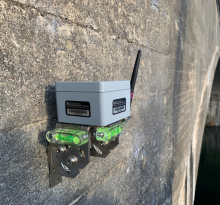
Structural tilt monitoring has become increasingly important as aging infrastructure demands continuous assessment of stability and movement. Inclinometer sensors provide precise measurements of angular changes in structures ranging from bridge piers and settlement to building foundations, offering

Geotechnical Monitoring Parameters and Instrumentation Best Practices for Infrastructure Projects
Modern infrastructure projects demand precise geotechnical mon itoring to ensure safety, longevity, and performance. With aging infrastructure systems across the globe, geotechnical engineering professionals must implement comprehensive monitoring strategies that capture critical parameters and provide actionable insights