
How Wireless Sensors Reveal Hidden Earthquake Damage Before It Becomes Dangerous
The ground stops moving. Sirens fade. Then the real work begins.
Engineers, DOT teams, and infrastructure owners face an urgent question: Is this bridge, building, or dam still safe? And just as important: How do we know for sure, fast enough to protect the public without shutting down critical routes for weeks?
Traditional visual inspections remain essential. But after a significant earthquake they have well-known limitations: they’re slow, they’re resource-intensive, and they can miss the subtle, hidden damage that worsens over the days and weeks that follow.
That’s where wireless structural health monitoring changes the equation.
Wireless sensors don’t replace inspector, they give them better information, faster. By continuously tracking movement, stress, vibration, and crack progression, these systems identify problems invisible to the naked eye and direct human expertise to the structures that need it most.
Why Traditional Post-Earthquake Inspections Struggle
After a major seismic event, inspection backlogs stretch for days or even weeks. Large structures like bridges and dams require detailed assessments that are difficult to scale quickly, especially when access is restricted, aftershocks continue, or the same crews are needed at dozens of sites at once.
Even thorough visual inspections have blind spots. Internal stress changes, small foundation shifts, and developing fatigue often don’t show up immediately. A bridge can look structurally sound right after the quake, only for problems to emerge days later as aftershocks continue or traffic loads return.
Without continuous data, decisions about whether to keep a route open, restrict traffic, or close it entirely are made with incomplete information. That uncertainty carries real costs, in safety risk when a damaged structure stays open, and in economic disruption when a sound one stays closed.
The Baseline Advantage: Why Monitoring Must Start Before the Earthquake
Here is the part that surprises many infrastructure owners: the most valuable post-earthquake data is collected before the earthquake.
A structure instrumented ahead of time gives engineers three things no post-event inspection can:
- A pre-event baseline. Months of normal tilt, strain, and vibration behavior define exactly what “healthy” looks like for that specific structure, including its daily thermal cycles and traffic response.
- A recording of the event itself. Event-triggered wireless vibration sensors capture the structure’s actual response during the shaking, at hundreds of samples per second.
- An immediate before-and-after comparison. Within minutes of the event, engineers can see whether a pier rotated, a member’s strain state shifted, or the structure’s natural frequencies changed, the fingerprints of hidden damage.
And because the sensors run for years on internal batteries and the gateways are solar powered, the system keeps reporting even when the earthquake takes down grid power and site access, precisely the conditions under which every other source of information goes dark.
Wireless Structural Health Monitoring vs. Traditional Manual Inspections
| Capability | Traditional Manual Inspections | Resensys Wireless Structural Health Monitoring |
| Monitoring frequency | Periodic (snapshot in time) | Continuous (24/7 real-time data) |
| Detection of hidden/subtle damage | Limited | Significantly enhanced |
| Real-time alerts | Not available | Immediate notifications via cloud |
| Availability after the event | Delayed by access, daylight, and crew availability | Immediate — reporting through the shaking and aftershocks |
| Remote data access | Requires on-site visits | Available anytime, from anywhere |
| Long-term trend analysis | Limited | Advanced (historical trends + predictive insights) |
| Suitable monitoring duration | Short-term (days to weeks) | Long-term (10+ years, maintenance-free) |
| Installation and ongoing effort | High (repeat site visits) | Low (quick install, no maintenance for years) |
| Basis for decisions | Primarily observation-based | Data-driven + predictive |
The Sensors That Actually Matter After an Earthquake
Different sensors reveal different parts of the story:
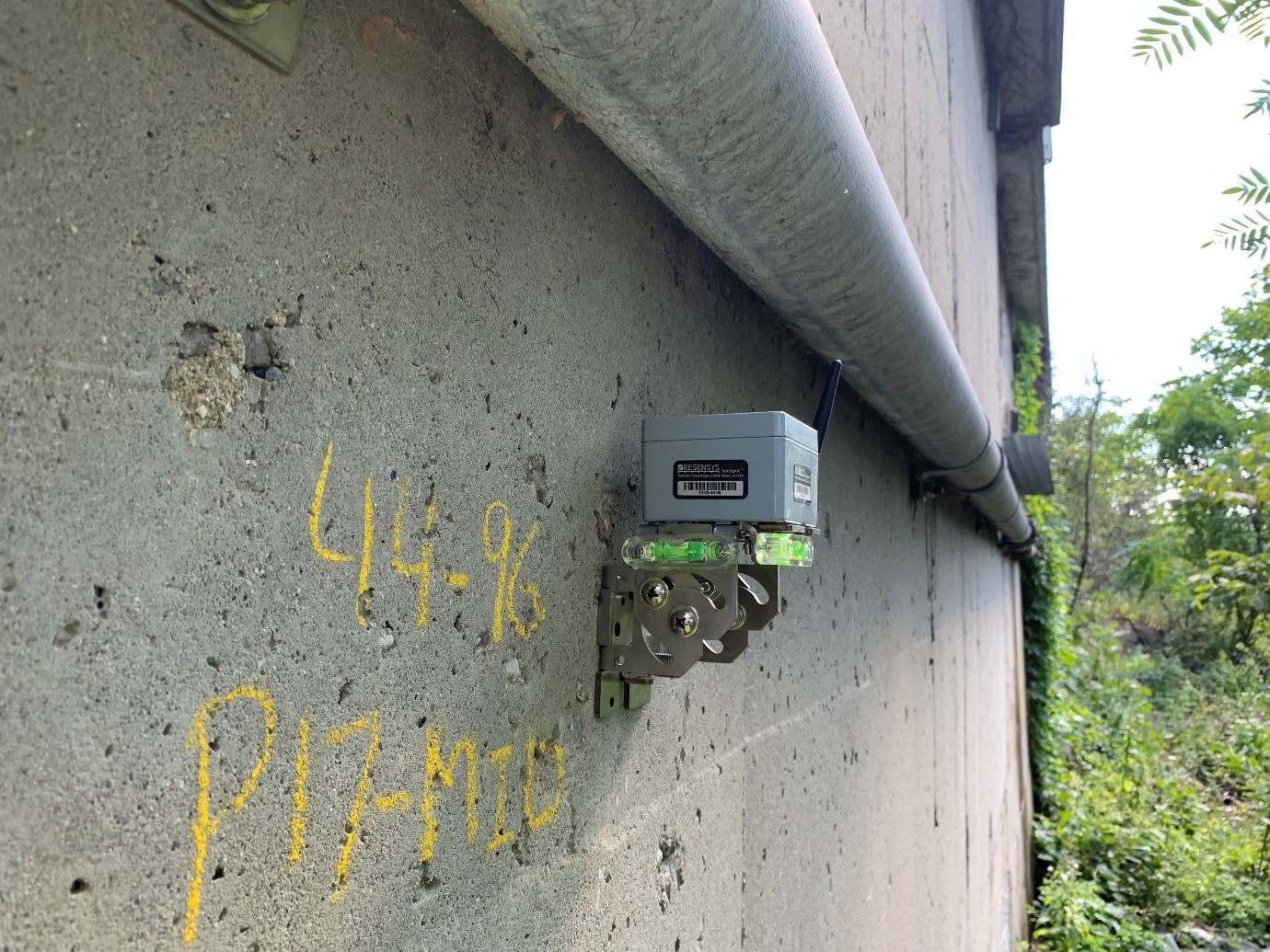
Wireless Tilt Sensors
Detect even small changes in inclination or rotation, resolving movements as small as 0.0003°. After an earthquake, this reveals foundation settlement, pier movement, or structural leaning long before it is visible. Resensys SenSpot™ Wireless Tilt Meters are built for exactly this: rugged, long-life devices installed in minutes and left in place for years, with a fine-adjustment mount that establishes a precise reference from day one.
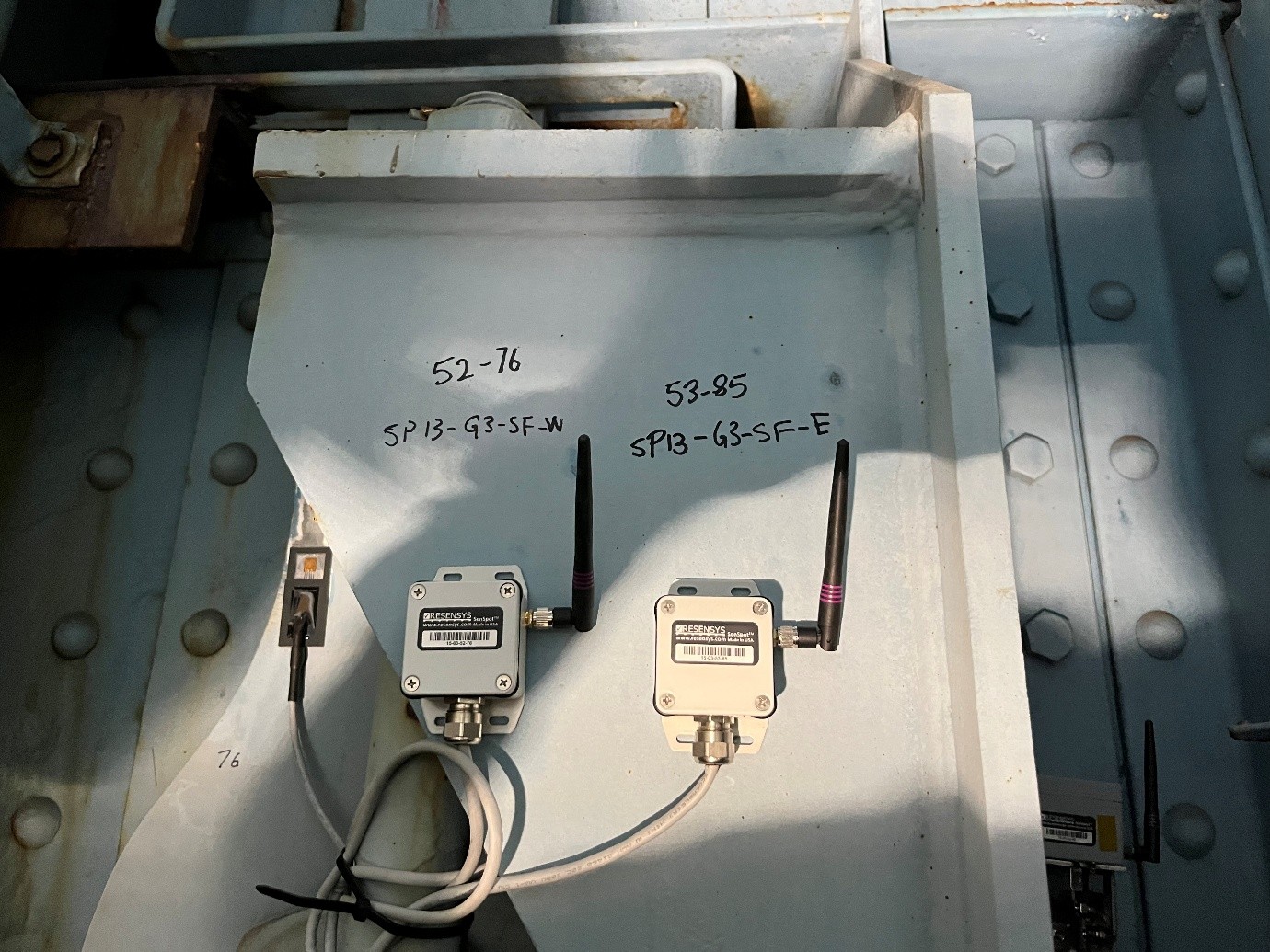
Wireless Strain Gauge Sensors
These wireless strain gauge sensors measure how materials respond to stress with 1 micro-strain resolution. Earthquakes cause sudden overloads and more insidiously, redistribute loads in ways that accelerate fatigue. Continuous strain monitoring shows whether critical members are still carrying load the way they did before the event, or whether force has quietly shifted somewhere it shouldn’t be.
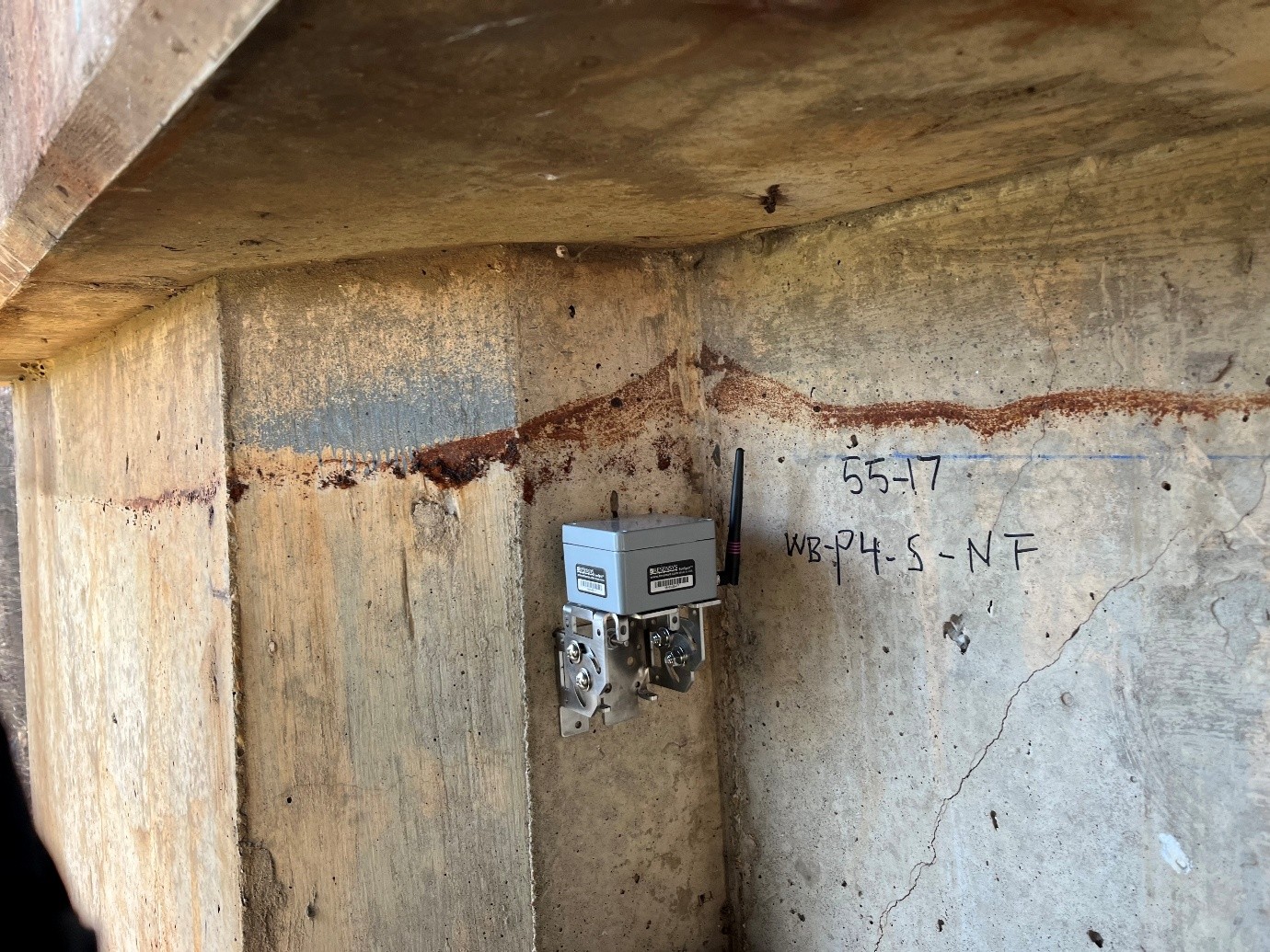
Wireless Displacement and Crack Meters
Wireless displacement/crack meters track how existing cracks and joints behave, with 0.01 mm resolution. Earthquake damage often continues to evolve after the shaking stops. Monitoring crack width and joint movement answers the question every post-event engineer asks: is this stable, or is it getting worse?
Wireless Vibration Sensors
Wireless vibration sensors capture changes in a structure’s dynamic behavior. A shift in natural frequency or damping is one of the most reliable global indicators of hidden stiffness loss damage that visual inspection can miss entirely because it hides inside connections, foundations, or concrete. Event-triggered recording also documents every aftershock’s effect while inspectors stay safely off the structure.
When these sensors work together on the same wireless platform, they create a far more complete picture than any single technology alone.
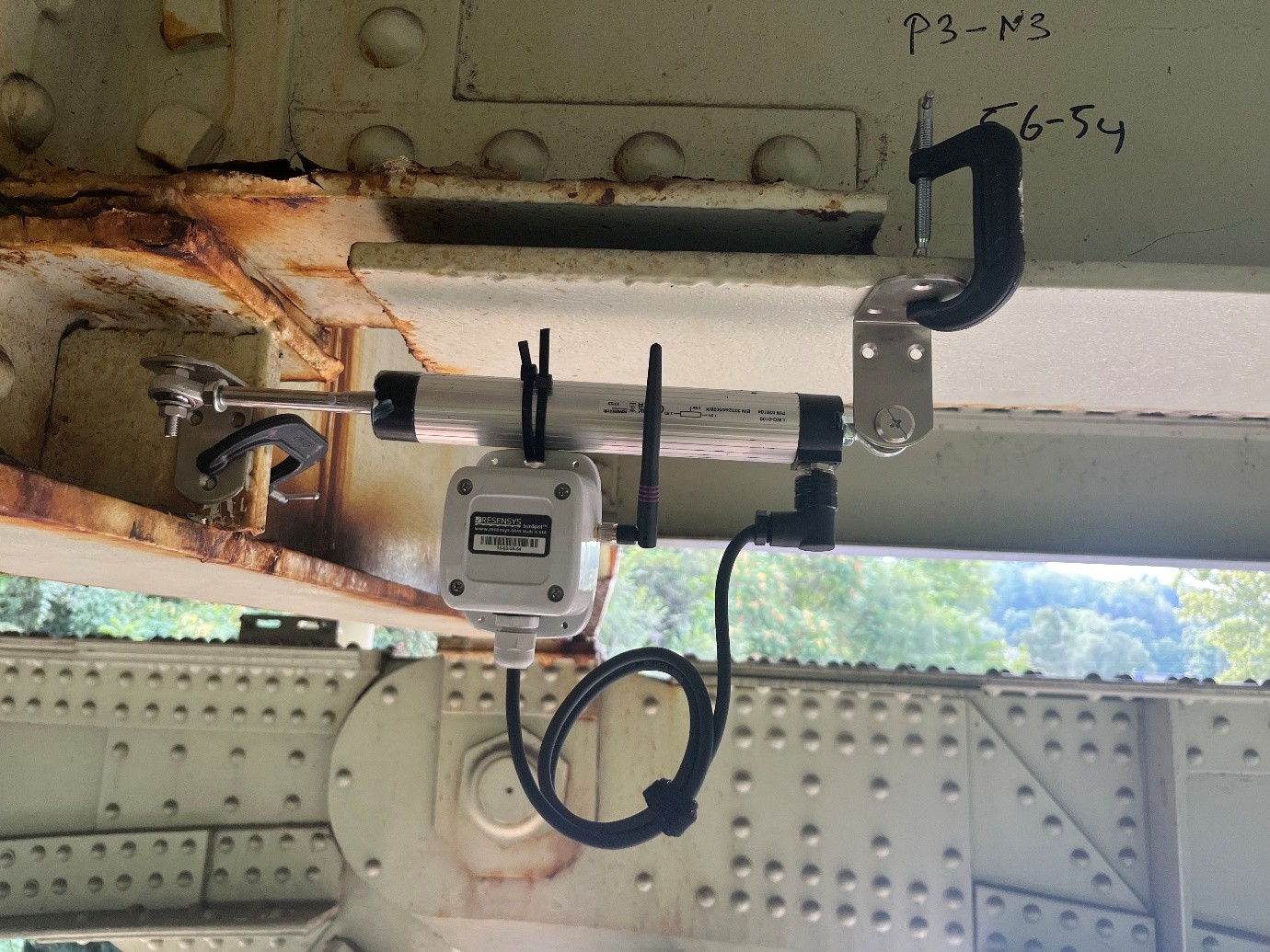
Why Combining Multiple Sensors Delivers Better Results
No single sensor tells the whole story. A tilt sensor might show that a bridge pier has rotated slightly. A strain sensor on the same pier reveals whether that movement is creating dangerous stress concentrations. Vibration data adds a third, independent layer by showing whether the structure’s global behavior has changed. When all three point the same direction, engineers can act with confidence; when they don’t, the system has just saved an unnecessary closure.
This multi-sensor approach is what moves teams from reactive firefighting to confident, data-driven decisions about inspections, traffic restrictions, and repair priorities.
At Resensys, we built the SenSpot™ platform specifically for this kind of real-world complexity. Our wireless sensors install in minutes without wiring, require virtually no maintenance, and deliver clean data for 10+ years on a single battery. That reliability matters most in the chaotic days after a seismic event — when the systems that were easy to install are the only ones still reporting.
The Role of AI and Digital Twins Moving Forward
Artificial intelligence and digital twin technology are beginning to enhance post-earthquake assessment. AI can sift large volumes of sensor data and flag unusual patterns; digital twins let engineers simulate how a damaged structure might behave under aftershock loading or restored traffic.
But these tools are only as useful as the data feeding them. High-quality, continuous measurements from wireless sensors anchored to a pre-event baseline are what make advanced analytics practical for real infrastructure decisions.
Bottom Line
Earthquakes don’t give us the luxury of time. After the shaking stops, every hour matters for public safety, for economic continuity, and for the people who rely on that infrastructure every day.
Wireless structural health monitoring doesn’t replace experienced inspectors. It gives them a decisive advantage: real-time visibility into how structures actually responded, early detection of hidden problems, and the ability to focus expertise where it’s needed most.
For bridge owners, dam operators, and transportation agencies in seismic regions, the question is no longer whether continuous monitoring makes sense. It’s whether the systems will already be in place with baselines established when the next event hits.
Ready to explore how SenSpot™ wireless sensors could strengthen your earthquake preparedness and recovery capabilities? Reach out at info@resensys.com or visit resensys.com to learn more.

About Author

Matt
-
 How Wireless Monitoring Sensors Help Prevent Downtime in Data Centers
In today’s hyperconnected world, data centers are the beating heart of digital
-
 5 Key Indicators Your Infrastructure Needs Structural Health Monitoring (SHM)
Structural integrity is essential for the safety, functionality, and longevity of infrastructure