
Alert Fatigue in Infrastructure Monitoring
Why Alert Fatigue Is a Growing Risk for Infrastructure Owners
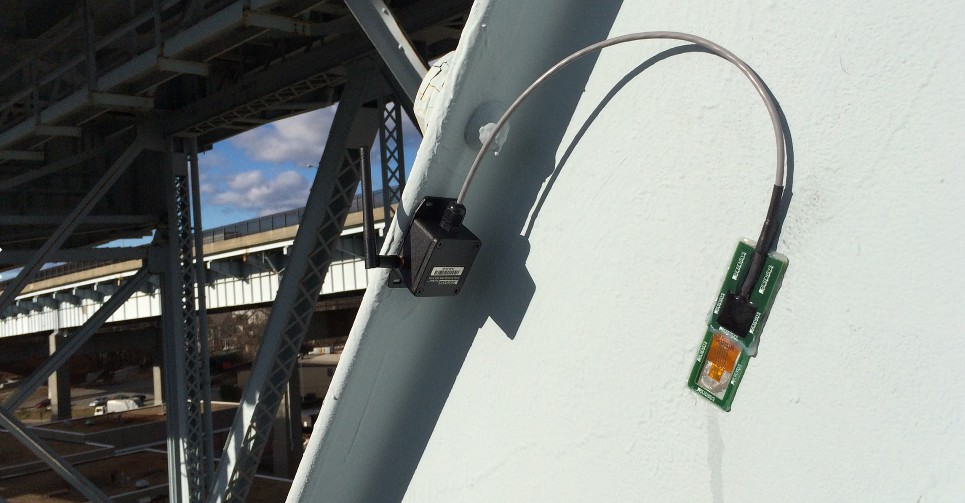
Digital monitoring has become essential for maintaining the safety and reliability of critical infrastructure. Bridges, transportation networks, industrial assets, and public facilities increasingly rely on sensor-based alerts to detect abnormal behavior. However, as monitoring coverage expands, many organizations encounter alert fatigue, a condition where excessive or poorly prioritized alerts overwhelm engineers and operators.
In government-managed and industrial infrastructure alike, alert fatigue can delay responses to real risks, undermine confidence in monitoring programs, and compromise public safety. Preventing this requires intelligent alert monitoring systems, configurable sampling strategies, and real-time visualization that converts data into actionable insight.
What Is Alert Fatigue?
Alert fatigue is a condition in which frequent, non-critical alerts reduce an operator’s ability to recognize and respond to genuine threats.
How Alert Fatigue Develops in Infrastructure Monitoring
- High-frequency sampling without contextual filtering
- Static thresholds that ignore operational variability
- Event-based alerts without prioritization
- Limited visibility into historical and comparative data
Why Alert Fatigue Is Dangerous
In safety-critical environments, alert fatigue can result in:
- Slower response to structural anomalies
- Missed early indicators of fatigue-related damage
- Increased operational and public safety risk
Role of Alert Monitoring Systems in Infrastructure Safety
An effective alert monitoring system does not simply notify, it enables informed decision-making.
From Basic Alerts to Intelligent Monitoring
Traditional alerting relies on fixed limits and single-sensor triggers. Modern systems integrate:
- Multi-sensor correlation
- Adjustable sampling intervals
- Context-aware alert thresholds
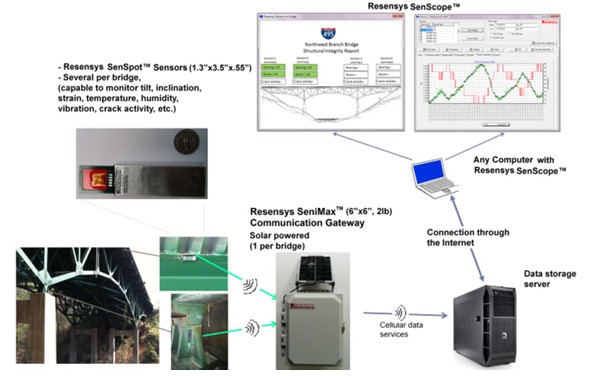
Resensys’ SenScope™ data acquisition software exemplifies this approach by condensing large volumes of data from wireless SenSpot™ sensors into actionable structural diagnostics.
Data Visualization That Reduces Cognitive Load
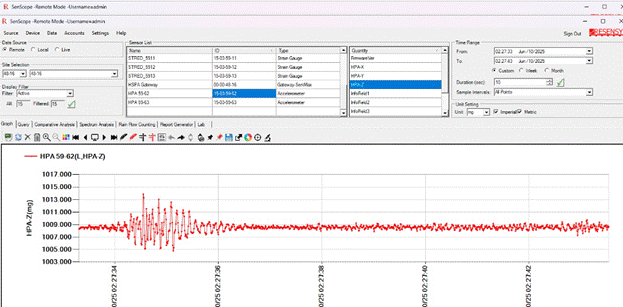
SenScope™ provides intuitive visualization of real-time and historical data, allowing engineers to assess alerts within the broader structural context, an essential step in reducing alarm fatigue.
Real-Time Monitoring Systems vs Traditional Inspections
Limitations of Traditional Inspections
- Periodic and labor-intensive
- Unable to capture transient or short-duration events
- Dependent on visual indicators rather than continuous data
Advantages of a Real Time Monitoring System
A real time monitoring system enables continuous observation of structural behavior using adjustable sampling intervals, from 50 milliseconds (20 samples per second) to 15 seconds, depending on monitoring needs.
This flexibility allows infrastructure owners to balance data resolution with long-term monitoring efficiency.
Automated and Critical Alert Systems: Reducing Alarm Fatigue
How Automated Alert Systems Improve Reliability
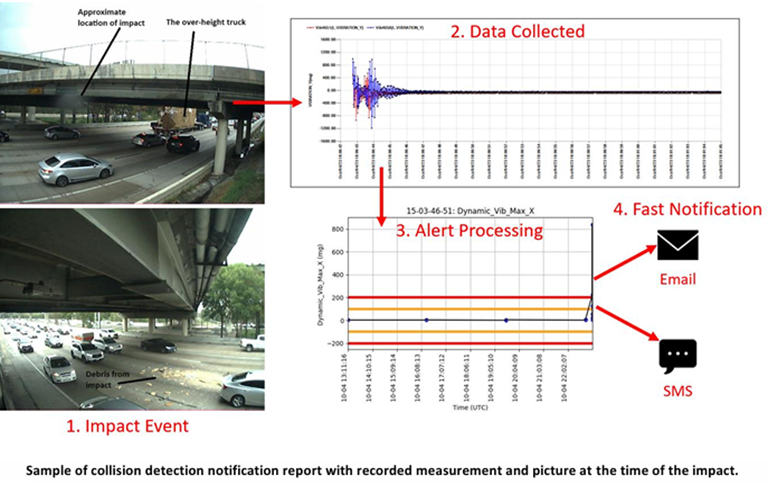
An automated alert system evaluates sensor data continuously and triggers alerts only when conditions exceed user-defined thresholds. SenScope™ automatically delivers alerts via email or text, ensuring timely notification without overwhelming users.
Importance of a Critical Alert System
A well-designed critical alert system:
- Prioritizes alerts by severity and persistence
- Escalates only when thresholds are meaningfully exceeded
- Supports rapid response to structural risks
This approach ensures attention is directed to conditions that genuinely require action.
Event Detection, Burst Mode, and High-Resolution Monitoring
Capturing Transient Structural Events
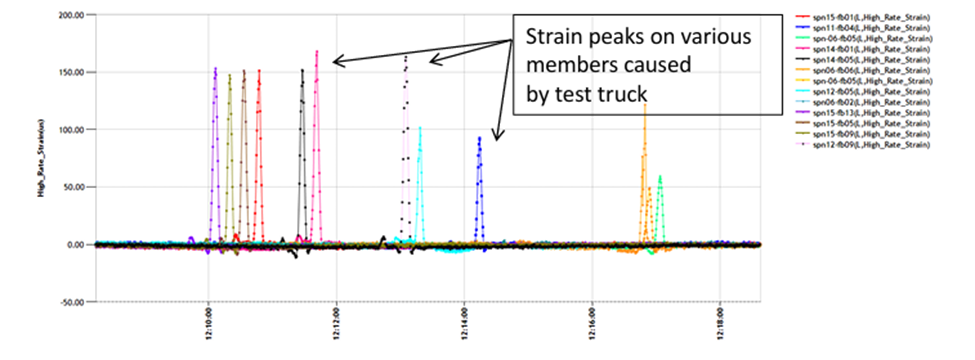
Certain structural behaviors, such as heavy truck crossings, wind gusts, or dynamic loading cycles occur over very short timeframes. To address this, Resensys supports burst mode data transmission (Type C sensors only).
Burst Mode Capabilities
- High-rate data capture triggered by sudden strain changes
- User-adjustable sampling rate from 10 to 100 samples per second
- Trigger thresholds adjustable from 8 micro-strain to 512 micro-strain
This capability is critical for recording waveform-level data during live-load events while avoiding continuous high-rate sampling that contributes to alert fatigue.
Condition Monitoring Solutions and Fatigue Monitoring
Effective condition monitoring solutions combine:
- Adjustable sampling strategies
- Long-range wireless communication (up to 300 m / 980 ft)
- Reliable data acquisition across multiple sites
SenScope™ supports live visualization, historical data archiving, and real-time comparison across sensors, enabling scalable monitoring for government agencies and industrial operators alike.
Fatigue Monitoring for Long-Term Asset Health
Fatigue monitoring relies on long-term trend analysis rather than isolated events. Continuous monitoring helps engineers understand how cyclic loads affect structural performance over time, supporting predictive maintenance strategies.
Effective condition monitoring solutions combine:
- Adjustable sampling strategies
- Long-range wireless communication (up to 300 m / 980 ft)
- Reliable data acquisition across multiple sites
SenScope™ supports live visualization, historical data archiving, and real-time comparison across sensors, enabling scalable monitoring for government agencies and industrial operators alike.
Fatigue Monitoring for Long-Term Asset Health
Fatigue monitoring relies on long-term trend analysis rather than isolated events. Continuous monitoring helps engineers understand how cyclic loads affect structural performance over time, supporting predictive maintenance strategies.
Fatigue Analysis Through Smart Monitoring
How Continuous Data Supports Fatigue Analysis
Accurate fatigue analysis depends on high-quality, long-duration datasets. SenScope™ enables:
- Export of sensor data to Excel for engineering analysis
- Visualization of stress cycles and long-term trends
- Correlation of load events with structural response
Preventing Long-Term Degradation
By identifying fatigue-related patterns early, asset owners can intervene before damage progresses, reducing lifecycle costs and improving safety outcomes.
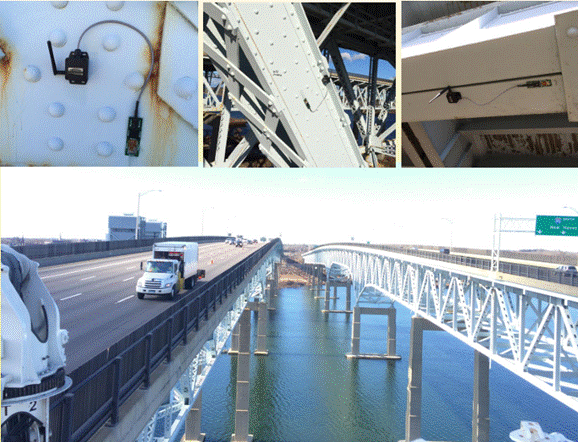
Sensor Types and Monitoring Flexibility
Resensys supports multiple sensor configurations to meet diverse infrastructure needs:
- Type D: Normal sampling from 100 ms (10 samples/sec) to 15 sec, without event detection
- Type C: Normal sampling with event detection and burst mode capability (up to 100 samples/sec)
- Type R: Similar to Type D but capable of measuring three strain signals, ideal for rosette gauge applications
This flexibility ensures monitoring systems can be tailored to specific structural and regulatory requirements.
How Advanced Monitoring Solutions Add Long-Term Value
- Improved Safety, Compliance, and Transparency: For government agencies, continuous data supports auditability and regulatory compliance. For industrial operators, it enables operational reliability and risk mitigation.
- Optimized Lifecycle Management: Advanced monitoring reduces unplanned downtime, improves maintenance planning, and ensures resources are allocated based on actual structural condition rather than assumptions.
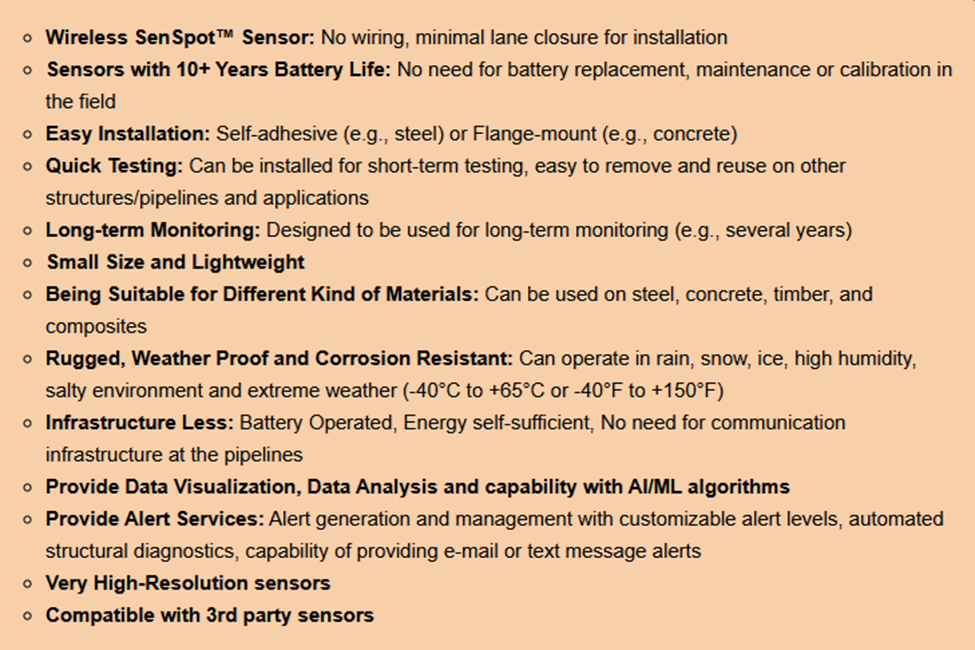
Advantages of Resensys Wireless Monitoring systems
Conclusion: Addressing Alert Fatigue with Intelligent Monitoring
Alert fatigue is not a technology problem, it is a system design challenge. By combining intelligent alert monitoring systems, adjustable sampling strategies, automated alerts, and advanced data visualization, infrastructure owners can reduce alarm fatigue without compromising safety.
Solutions like SenScope™, paired with wireless condition monitoring sensors, provide a scalable, data-driven foundation for fatigue monitoring, fatigue analysis, and long-term infrastructure resilience.
FAQs
Q. What causes alert fatigue in infrastructure monitoring systems?
Ans. Alert fatigue is caused by excessive alerts, lack of prioritization, static thresholds, and monitoring systems that do not account for real-world structural behavior.
Q. How do real-time monitoring systems reduce alert fatigue?
Ans. Real-time monitoring systems analyze data continuously and use contextual thresholds, ensuring only meaningful and actionable alerts are delivered to users.
Q. Why is fatigue monitoring important for infrastructure assets?
Ans. Fatigue monitoring helps detect cumulative damage from repeated loads, enabling early intervention and extending the lifespan of critical infrastructure.
Related Documents:
SeniMax™ – Wireless Data Acquisition Gateway
SenScope™- Data Visualization Software

About Author

Matt
-
 Scour Critical Bridge Case Study: Wireless Tilt, Wireless Water Level Sensors and Camera on Continuous Span Concrete Girder Bridge
Monitored variables and members: piers tilt (incline; roll and pitch), water level
-
 Digital Twins for Structural Health Monitoring: What Every DOT and Infrastructure Engineer Needs to Know Right Now
Imagine if your bridge could quietly tell you it’s starting to get