
Digital Twins for Structural Health Monitoring: What Every DOT and Infrastructure Engineer Needs to Know Right Now
Imagine if your bridge could quietly tell you it’s starting to get tired – not after a crack shows up during an inspection, but weeks or months earlier, while there’s still time to act. That’s exactly what digital twins are bringing to structural health monitoring.
America’s infrastructure is aging fast. According to the 2025 ASCE Infrastructure Report Card, there are more than 623,000 bridges across the U.S. and while 44.1% are in good condition, a whopping 49.1% are rated fair and 6.8% are poor. Bridge rehabilitation needs sit at a staggering $191 billion, with a 10-year funding gap of $373 billion to bring them to a state of good repair. Bridges earned a C grade overall – better than some categories, but nowhere near where we need to be when traffic volumes keep climbing and extreme weather keeps testing these structures.
Traditional inspections still matter, but they’re snapshots. They tell you what’s wrong right now. Digital twins change the game by creating a living, breathing virtual replica of the physical asset that updates continuously with real-world sensor data. Instead of reacting to problems, engineers can finally start predicting them.
What Exactly Is a Digital Twin in Structural Health Monitoring?
A digital twin in structural health monitoring is a dynamic virtual model of a bridge, dam, building, or tunnel that combines:
- Real-time data from wireless strain gauge sensors, tilt sensors, crack and displacement sensors, and vibration sensors.
- Detailed computer models that predict how the bridge or dam bends, stresses, and performs under different conditions.
- Advanced analytics and AI.
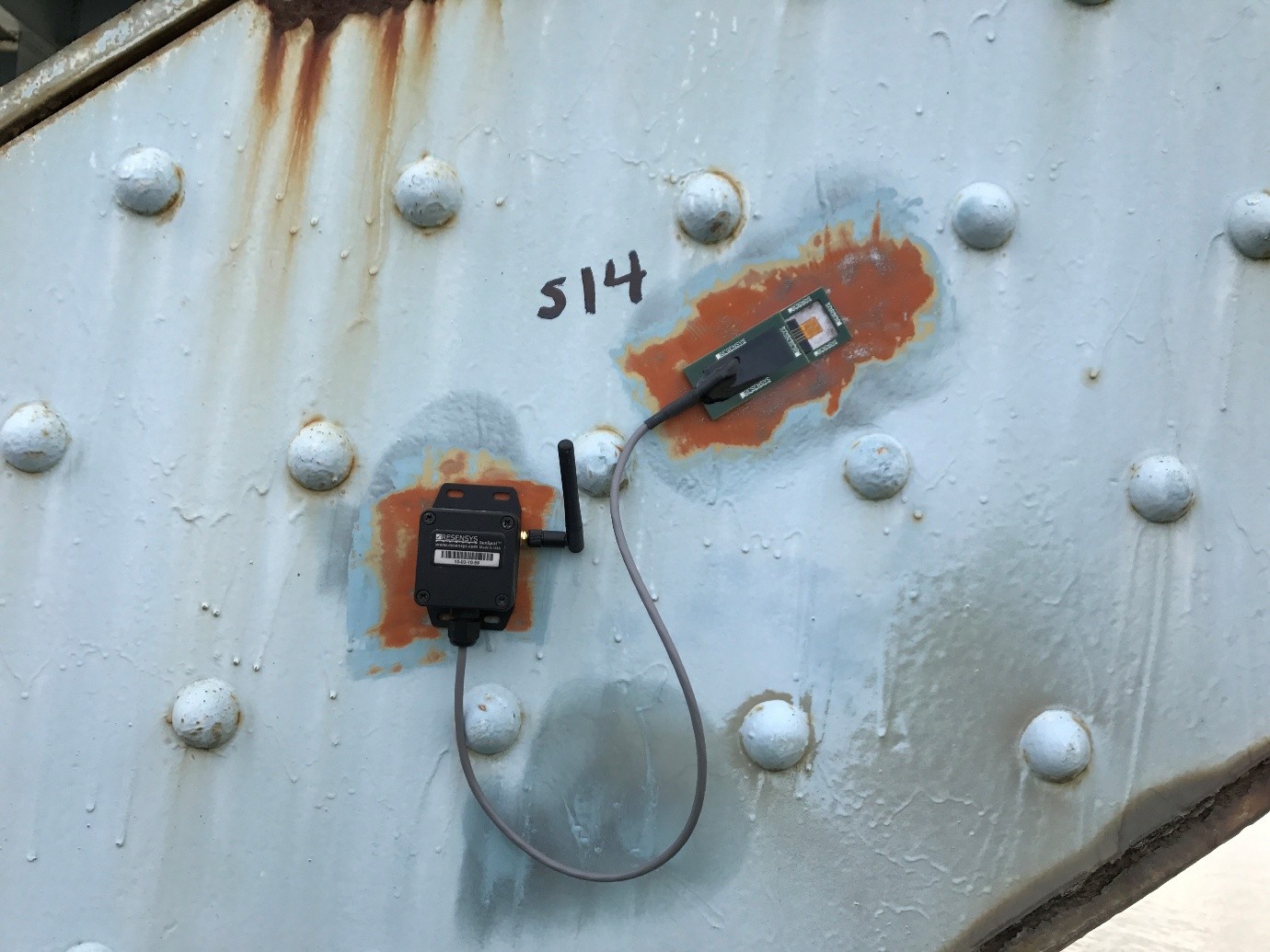
Unlike a static BIM (Building Information Modeling) model or a one-time engineering report, a true digital twin evolves with the structure. It learns how the structure actually behaves under traffic, wind, temperature swings, and seismic events – not just how it was supposed to behave on paper.
Think of it like a high-end fitness tracker for infrastructure. It doesn’t just count steps – it spots when your heart rate is trending in the wrong direction and suggests what to do about it before you end up in the ER.
Why Digital Twins Are Moving from “Nice to Have” to “Need to Have” Traditional monitoring has real limitations:
- Inspections are expensive, labor-intensive, and infrequent
- You only see what’s visible on the surface (or accessible by rope or drone)
- Data often lives in silos – strain here, tilt there, vibration somewhere else
- By the time a problem is obvious, repair costs have already ballooned
Digital twins close those gaps. They give engineers continuous visibility, earlier risk detection, and the ability to run “what-if” scenarios (What happens to this bridge during a 100-year storm? How does increased truck traffic affect fatigue life over the next decade?).
Real-world projects are already proving the value. The smartBRIDGE Hamburg project in Germany created a digital twin of the busy Köhlbrand Bridge (one of Germany’s most important cable-stayed bridges) to shift from reactive to predictive maintenance. In the U.S. and Europe, similar efforts on railway bridges, suspension bridges like the Clifton Suspension Bridge, and even mega dam clusters are showing how digital twins can reduce downtime, extend service life, and help prioritize limited maintenance dollars.
How Digital Twins Actually Work (And Where Resensys Fits In)
A good digital twin is only as strong as the data feeding it. That’s why sensor quality and reliability matter so much.
Here’s the typical flow:
- Data Collection: Wireless strain gauge sensors measure how materials deform under load. Wireless tilt sensors track subtle changes in inclination and foundation movement. Crack and displacement sensors monitor progression over time. Wireless vibration sensors capture dynamic response to traffic, wind, and seismic activity.
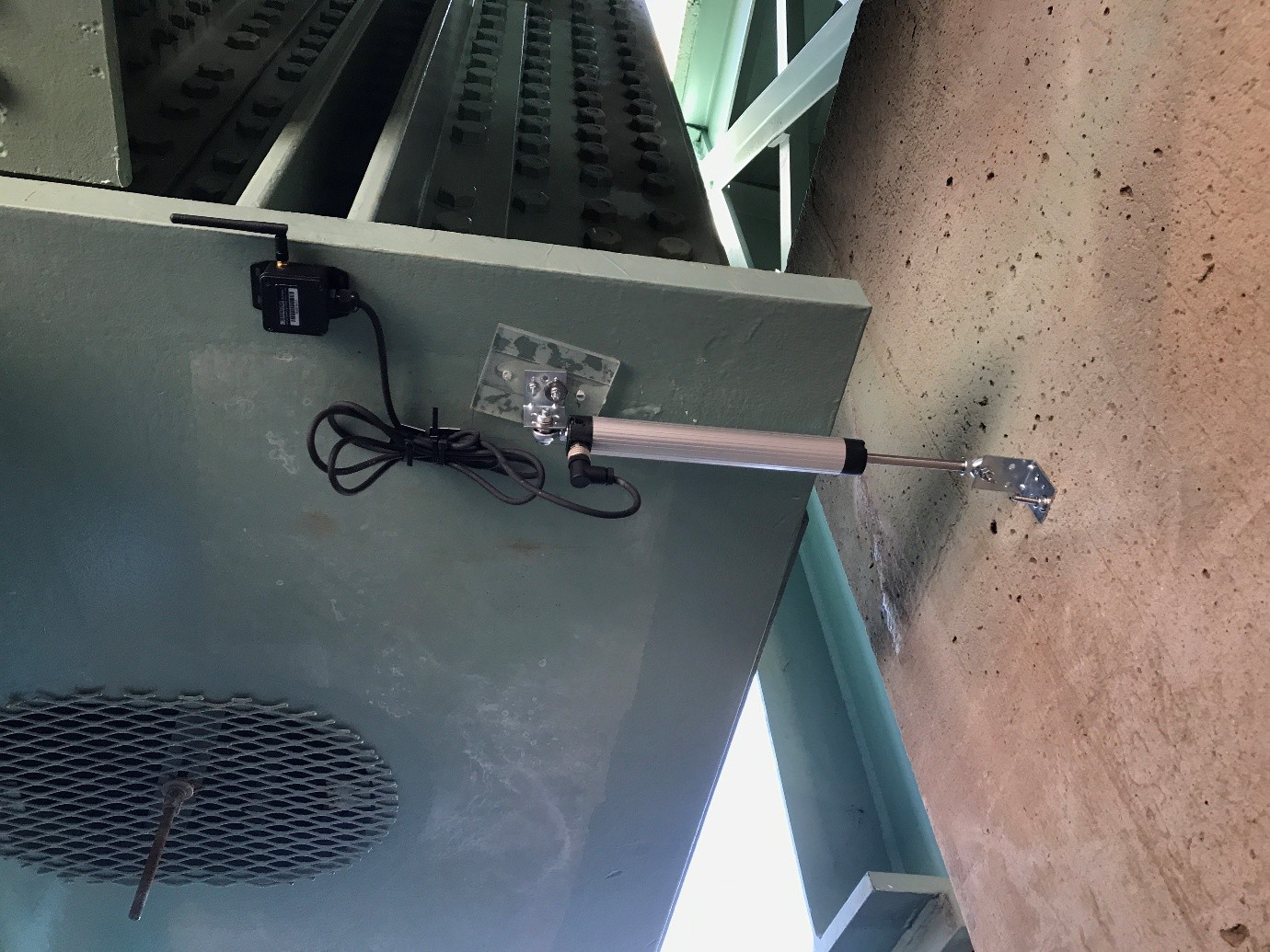
- Data Transmission: Modern wireless monitoring systems send this data to the cloud in real time, without the headaches of long cable runs or lightning vulnerability.
- Model Updates: The incoming data continuously calibrates and updates the virtual model so it reflects reality, not assumptions.
- Predictive Analytics & Simulation: AI and machine learning spot trends, anomalies, and fatigue accumulation. Engineers can simulate future scenarios and test maintenance strategies virtually before spending a dime in the field.
At Resensys, our SenSpot™ wireless sensing platform was built for exactly this kind of long-term, low-maintenance deployment. Our sensors deliver reliable data that digital twins need with 10+ year battery life, easy installation, and seamless integration into cloud platforms like SenScope™. We’re not just selling sensors; we’re helping infrastructure owners build the trustworthy data foundation their digital twins depend on.
Real Benefits Infrastructure Owners Are Already Seeing
- Earlier detection of developing issues (before they become expensive or dangerous)
- Better prioritization of maintenance – focus dollars where they deliver the biggest safety and service-life gains
- Reduced lifecycle costs through predictive (instead of reactive or purely scheduled) maintenance
- Improved safety for both the public and inspection crews
- Stronger decision-making when justifying budgets to stakeholders
Digital Twins vs. Traditional Structural Monitoring
| Capability | Traditional Monitoring | Digital Twins |
| Asset Representation | Static snapshots | Dynamic, continuously updated |
| Data Updates | Periodic | Real-time |
| Risk Detection | Mostly reactive | Predictive |
| Scenario Simulation | Limited | Advanced “what-if” analysis |
| Maintenance Strategy | Scheduled or reactive | Condition-based & predictive |
| Decision Support | Historical data | Real-time insights + simulations |
The Bottom Line
Digital twins aren’t science fiction anymore – they’re becoming a practical reality for bridges, dams, high-rises, and transportation infrastructure. But they’re only as good as the sensor data feeding them. Cheap or unreliable sensors create noisy, untrustworthy twins. High-quality, long-life wireless structural health monitoring systems from Resensys give you the clean, continuous, trustworthy data these models need to deliver real value.
If you’re responsible for keeping critical infrastructure standing strong for the next 50–100 years, the question isn’t really whether digital twins will matter. It’s how soon you’ll have the right sensor foundation in place to actually use them.
Ready to explore how wireless strain, tilt, crack, displacement, and vibration monitoring can power a smarter digital twin strategy for your assets? Drop us a note at here.

About Author

Matt
-
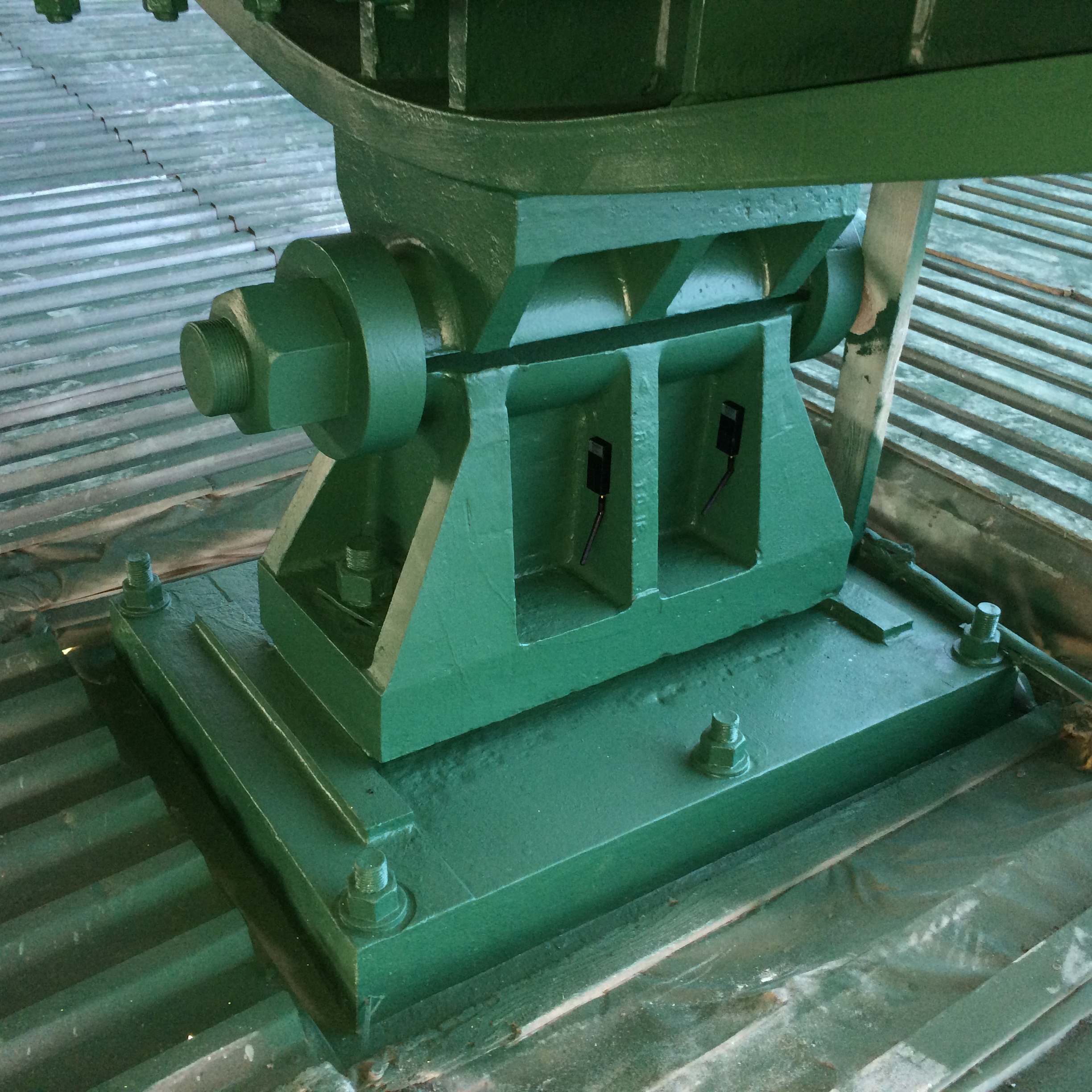 Resensys Wireless Senspot sensor deployed to monitor I-70 Bridge over Patapsco River
In September 2014, a Resensys structural health monitoring system was deployed on
-
 Sustainability – small products, big impact
When it comes to SUSTAINABILITY, often small wins BIG. What are some