
How AI-Powered Wireless Tilt Sensors Spot Structural Problems Months Before They Become Emergencies
It’s 2:17 a.m. on a Tuesday. A bridge maintenance supervisor’s phone lights up with a quiet alert – not a full-blown emergency, but something subtle. A wireless tilt sensor on Pier 3 has detected a 0.08-degree shift over the past 11 days. Nothing dramatic. Nothing visible to the naked eye. But the AI model flagged it as “unusual trend – investigate.”
That single data point just saved potentially hundreds of thousands of dollars in emergency repairs and, more importantly, prevented a possible closure during rush hour.
This isn’t science fiction. It’s happening right now on bridges, dams, retaining walls, and high-rise buildings across the United States.
According to the 2025 ASCE Infrastructure Report Card, America has more than 623,000 bridges, with 6.8% rated in poor condition and another 49.1% sitting in fair condition – meaning they’re one bad winter or heavy load away from slipping into poor condition. Meanwhile, the country has over 92,000 structures, of which nearly 17,000 are classified as high-hazard potential. The average age of U.S. dams now exceeds 60 years.
Traditional inspection cycles – every 24 months for most bridges – simply can’t keep up with the speed at which problems can develop. That’s why forward-thinking infrastructure owners are moving aggressively toward predictive maintenance powered by wireless tilt sensors and artificial intelligence.
Why Reactive Maintenance Is Quietly Bleeding Budgets
For decades, the default approach has been simple: wait until you can see the problem.
A crack appears. A wall starts leaning. A pier settles unevenly. Only then does someone schedule an inspection, mobilize a crew, and write a big check.
The problem? Structural issues almost always start small – often months or years before they become visible. By the time you see movement with the naked eye, you’re usually in reactive mode: emergency contracts, lane closures, public scrutiny, and significantly higher costs.
Industry research consistently shows that shifting from reactive to predictive maintenance delivers powerful returns:
- 18-25% reduction in overall maintenance costs
- Up to 50% reduction in unplanned downtime
- 10:1 to 30:1 ROI within 12–18 months (McKinsey and multiple industry studies)
When you’re responsible for public safety and tight budgets, those numbers matter.
What Exactly Is a Wireless Tilt Sensor?
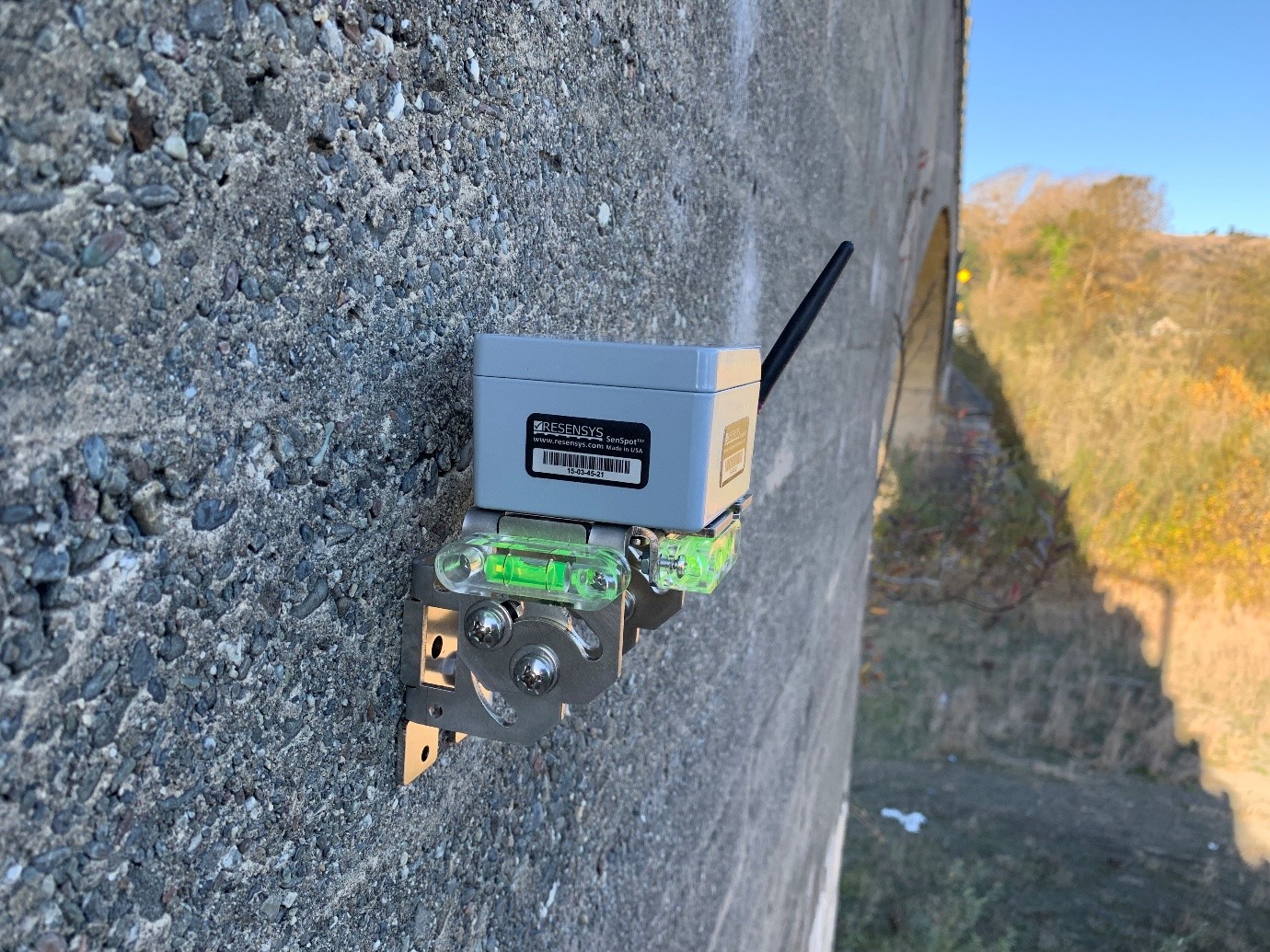
A wireless tilt sensor (also called an inclinometer in some applications) is a compact, rugged device that continuously measures changes in angle or inclination of a structure. Even tiny movements – sometimes just hundredths of a degree – can signal foundation settlement, pier rotation, wall displacement, or embankment movement.
Unlike traditional wired systems that require extensive cabling (expensive to install and prone to damage), modern wireless tilt sensors transmit data via low-power radio to a gateway, which sends it to the cloud. This makes deployment dramatically faster, cheaper, and more scalable — especially on large structures or in hard-to-reach locations.
How AI Turns Raw Tilt Data Into Early Warnings
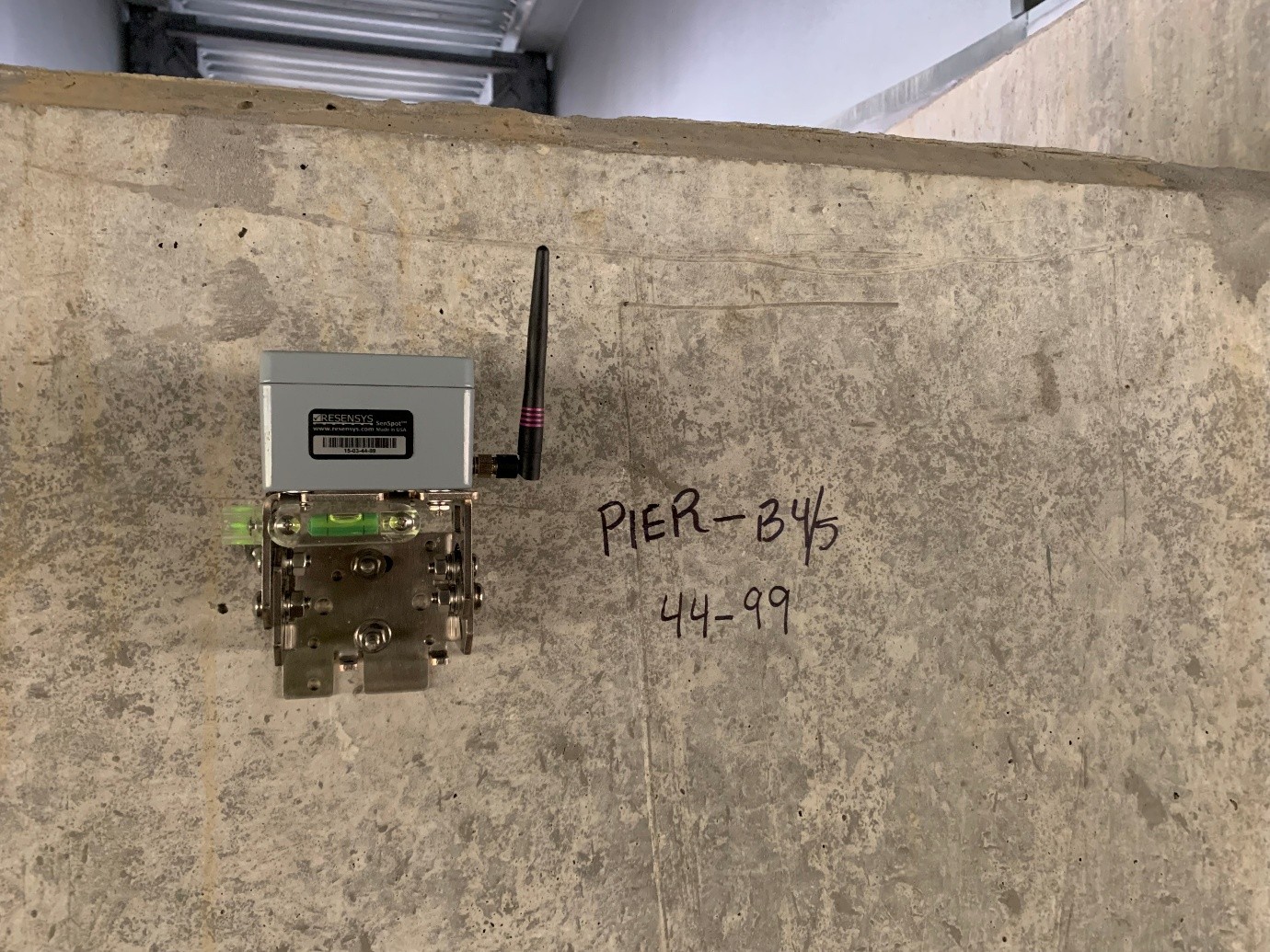
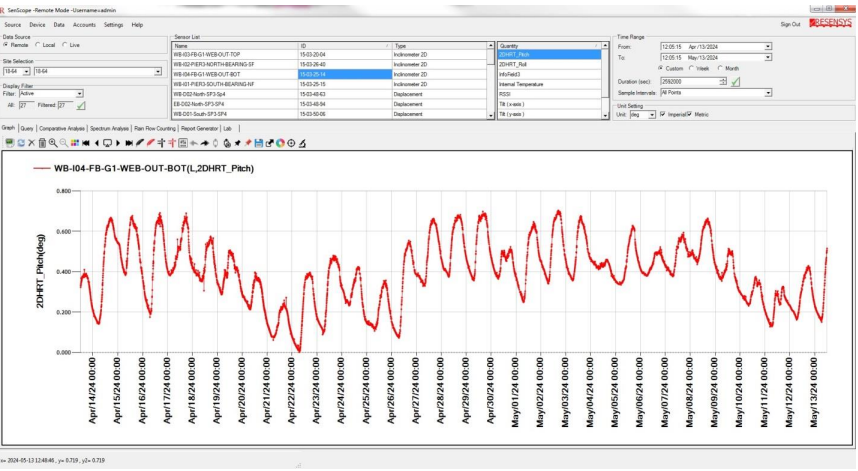
Pitch measurements of an installed Resensys 2DMRT SenSpotTM
Collecting data is easy. Making sense of it at scale is where the real power lies.
Modern AI-powered structural health monitoring systems don’t just log numbers – they learn what “normal” looks like for that specific structure over time. Then they watch for deviations.
Here’s what that looks like in practice:
- Pattern Recognition: The system identifies seasonal movement patterns caused by temperature or traffic and learns to ignore them.
- Anomaly Detection: It flags subtle, persistent shifts that don’t match historical behavior – often weeks or months before a human inspector would notice anything.
- Predictive Trending: By combining tilt data with strain, vibration, and environmental inputs, the system can estimate how fast a problem is progressing and when it might reach critical thresholds.
- Automated Alerts: Engineers get prioritized notifications instead of drowning in raw data.
This is the difference between “the bridge moved a little” and “Pier 3 has shown a consistent 0.08° trend over 11 days that exceeds normal thermal behavior – recommend site visit within 7 days.”
Where Wireless Tilt Monitoring Delivers the Biggest Impact
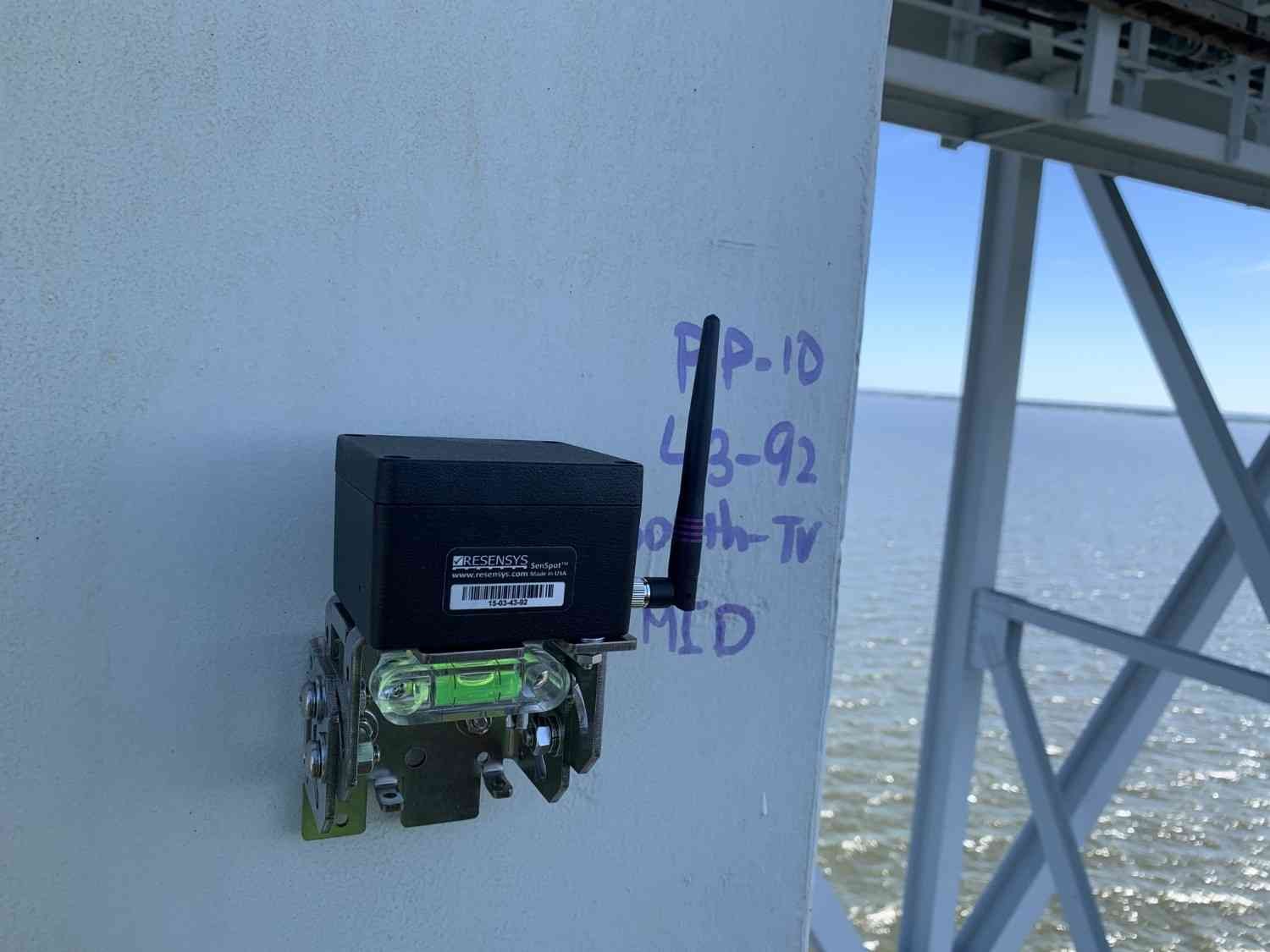
Bridges
Tilt sensors on piers, abutments, and decks help detect settlement, rotation, and differential movement – especially valuable on aging structures or those carrying heavier modern traffic loads than originally designed for.
Dams and Embankments
Even small movements in a dam or its abutments can indicate seepage, foundation issues, or slope instability. Continuous tilt monitoring gives operators early visibility that periodic visual inspections simply cannot provide.
Retaining Walls and Slopes
These structures often fail gradually. Wireless tilt sensors catch the early stages of movement, allowing stabilization before a full collapse occurs.
High-Rise and Commercial Buildings
Wind, thermal expansion, and foundation settlement all cause subtle tilt. Monitoring helps building owners understand long-term behavior and prioritize maintenance.
Wireless vs. Traditional Wired Systems
| Feature | Traditional Wired Systems | Wireless Monitoring Systems |
| Installation Complexity | High (cabling, trenching) | Low & fast |
| Scalability | Limited | Highly scalable |
| Maintenance Requirements | Higher | Significantly lower |
| Real-Time Data Access | Moderate | Advanced & remote |
| Predictive Analytics | Limited | AI-enabled |
| Long-Term Cost | Higher | Lower |
Wireless systems win on almost every practical metric for most infrastructure applications – especially when you need to monitor multiple structures across a district or state.
How Resensys Delivers Practical, Field-Proven Tilt Monitoring
At Resensys, we’ve spent years building wireless structural health monitoring systems specifically for the realities of infrastructure owners – not lab conditions.
Our SenSpot™ wireless tilt sensors are designed for long-term deployment with:
- Ultra-low power consumption (many units run 10+ years on a single battery)
- Rugged, weatherproof construction
- Easy, non-disruptive installation
- Seamless integration with strain gauges and vibration sensors for a complete picture of structural behavior
When you combine tilt data with strain and vibration through our SenScope™ cloud platform, you move from “we think something might be happening” to “here’s exactly what’s changing, how fast, and where you should focus resources.”
Infrastructure owners using Resensys’ structural monitoring systems consistently tell us the biggest win isn’t just the early warnings – it’s the ability to finally move from reactive firefighting to confident, data-driven maintenance planning.
Read also: Why Bridges Fail Without Warning and How Smart Monitoring Prevents Disaster
The Future Is Already Here
AI and machine learning models are getting better every year at distinguishing between normal environmental movement and genuine structural concerns. Digital twin technology is allowing engineers to simulate how a structure will behave under different load and weather scenarios. Edge computing is pushing more intelligence directly onto the sensors themselves.
The organizations that will win in the next decade are the ones that stop treating monitoring as a “nice-to-have” and start treating it as core infrastructure intelligence.
Bottom Line
America’s infrastructure is aging, budgets are tight, and public expectations for safety and reliability keep rising. Continuing to rely primarily on periodic visual inspections is like driving at night with the headlights off and hoping nothing jumps out in front of you.
AI-powered wireless tilt sensors, combined with strain and vibration monitoring, give you the ability to see problems developing in real time – often months before they become visible or critical.
If you’re responsible for bridges, dams, walls, or critical buildings, the question isn’t whether you can afford to implement smarter monitoring.
It’s whether you can afford not to.
Ready to see what continuous, AI-enhanced tilt monitoring could look like on your assets? Reach out at info@resensys.com or explore our wireless solutions at resensys.com.

About Author

Matt
-
 Monitoring Settlement of a Retrofitting Concrete Beam at a Building
Project Preview A high rise building’s load bearing concrete beam, which is
-
 ARTBA 2021 Bridges Report shows that more than 1/3 of all US bridges need repair
Check out the ARTBA 2021 Bridge Report Which shows that 220,000 US