Home > Applications > Bridge Monitoring > Fracture Critical Monitoring
Fracture Critical Member (FCB) is defined as component intension whose failure is expected to result in the collapse of the bridge/structure or the inability of the bridge/ structure to perform its function. A fracture-critical bridge or other structure has a structural component of which failure could lead to bridge distress and possibly collapse. The failure of a single major tension member or member element is likely to cause a significant portion or the entire bridge to collapse due to a lack of redundancy. Fracture critical designs can leave bridges vulnerable to possible collisions with ships or large trucks. A bridge/ structure can become fracture critical if deterioration over time leads to degradation of materials compared to their original design strengths, or if loading use increases such that designed redundancy is reduced.
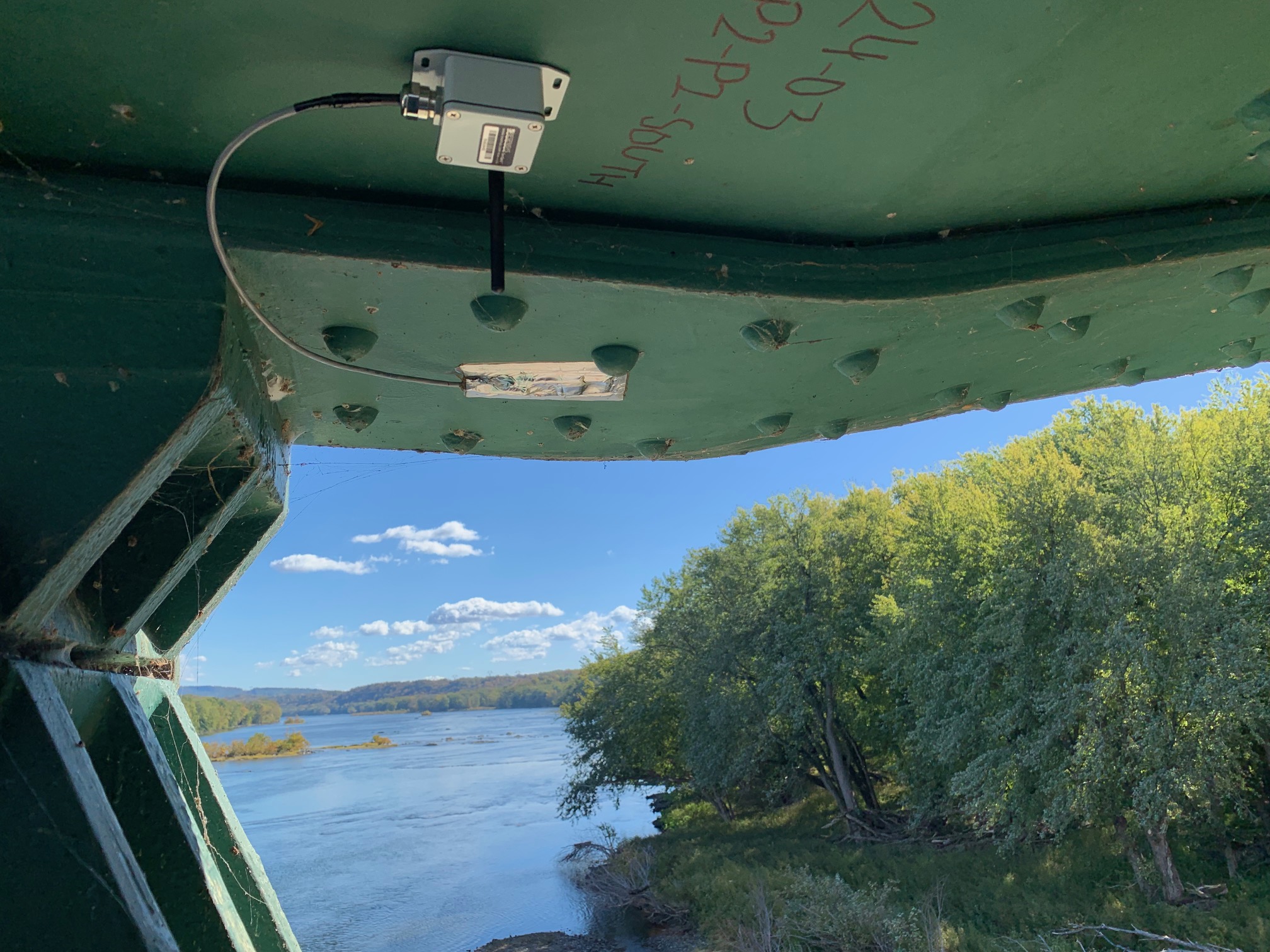
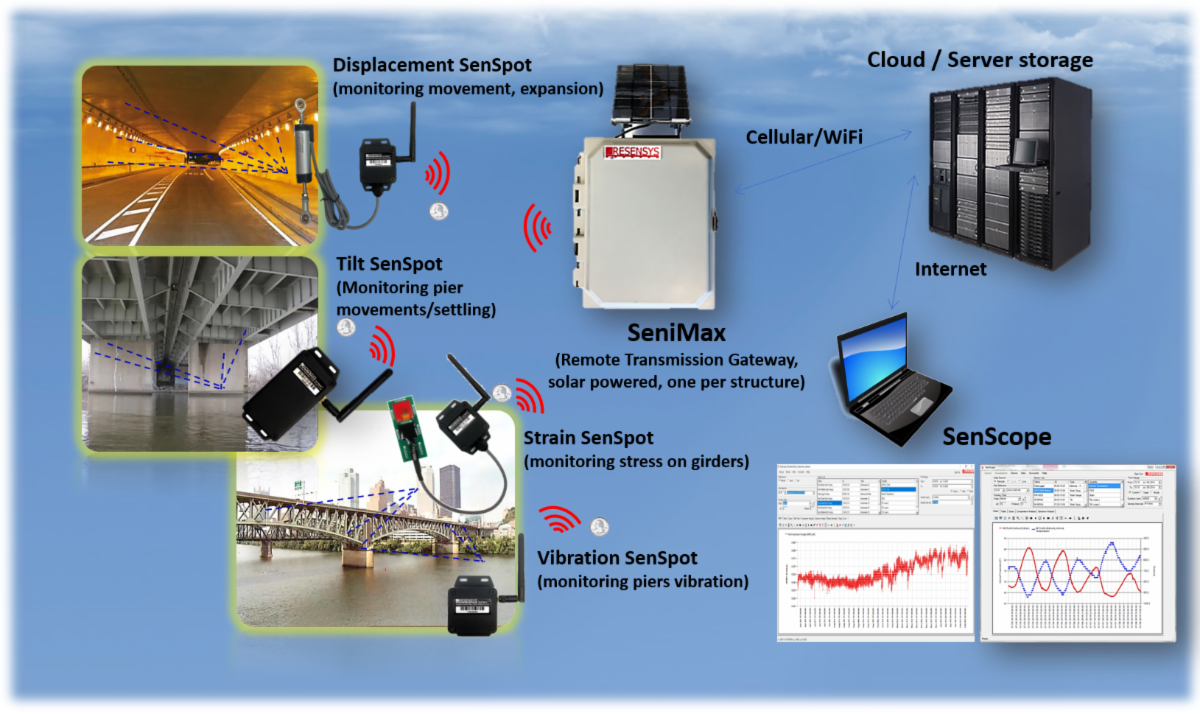
Typical applications of fracture critical monitoring include steel bridges, long span concrete bridges, bearings, piers, girders, truss members, gusset plates, floor beams, stringers, parking garages, pedestrian walkways, rail road structure and bridges, foundation, power and utility or petrochemical support structures. By monitoring strain and temperature on different members and structures to determine strain variations caused by temperature change and live traffic, data is provided which can be used for early stage detection of issues related to fatigue or formation of cracks. Resensys structural health monitoring solutions provide SenSpotTM data, which can also help determine load-bearing capacity of a bridge as well as detecting occasional overstrains caused by vehicles violating a bridge’s maximum allowed load. Resensys SenSpotsTM wireless sensors are able to monitor structural quantities such as tilt, displacement, strain and ambient temperature in concrete, steel and composite materials under wet, humid and extreme weather conditions. The products are corrosion resistant and can withstand salty environments.
 More Details

A fracture-critical structure contains at least one steel member in tension whose failure would cause partial or complete collapse, because no redundant load path exists. Examples include two-girder bridges, certain truss and tied-arch bridges, and railway structures. These members are why fracture-critical bridges carry the most demanding inspection requirements — and why they benefit most from continuous monitoring.
For a member with no backup, the margin between normal and critical is everything. Continuous strain monitoring measures each member's actual response to traffic, wind, temperature, and fatigue cycling, detecting abnormal stress patterns — a changing load path, a growing crack's redistribution signature — while intervention is still routine maintenance.
Strain sensors with 1 micro-strain resolution attach to fracture-critical members — self-adhesive on steel, installed in five to six minutes without welding or drilling. Each sensor also measures temperature for thermal compensation, samples continuously for years on one battery, and transmits through a solar-powered cellular gateway to a platform with automatic threshold alarms.
On fracture-critical tension members and their connections: girder tension flanges, truss tension chords and eyebars, hanger and floor-beam connections, and tie girders — as well as pipelines, towers, cranes, and industrial structures where the same single-path criticality applies.

Small wireless sensors that
make big differences
Address: 6517 Mid Cities Ave.
Beltsville MD 20705
USA
E-Mail: info@resensys.com
Phone: (301) 477 3075