Home > Applications > Bridge Monitoring > Scour Critical Bridges Monitoring
Scour is recognized as the leading cause of bridge failure in the United States, with 58% of bridge failures due to hydraulic conditions, according to the Federal Highway Administration (FHWA) and the National Bridge Failure Database. Effective monitoring of scour critical bridges is important to ensure their safety and longevity, especially during and after severe flood events.
Resensys provides cutting-edge wireless technology and tools designed to meet the specific needs of scour critical bridges. The system contributes real-time data on water levels, soil erosion, and bridge movement, enabling proactive measures to protect bridge.
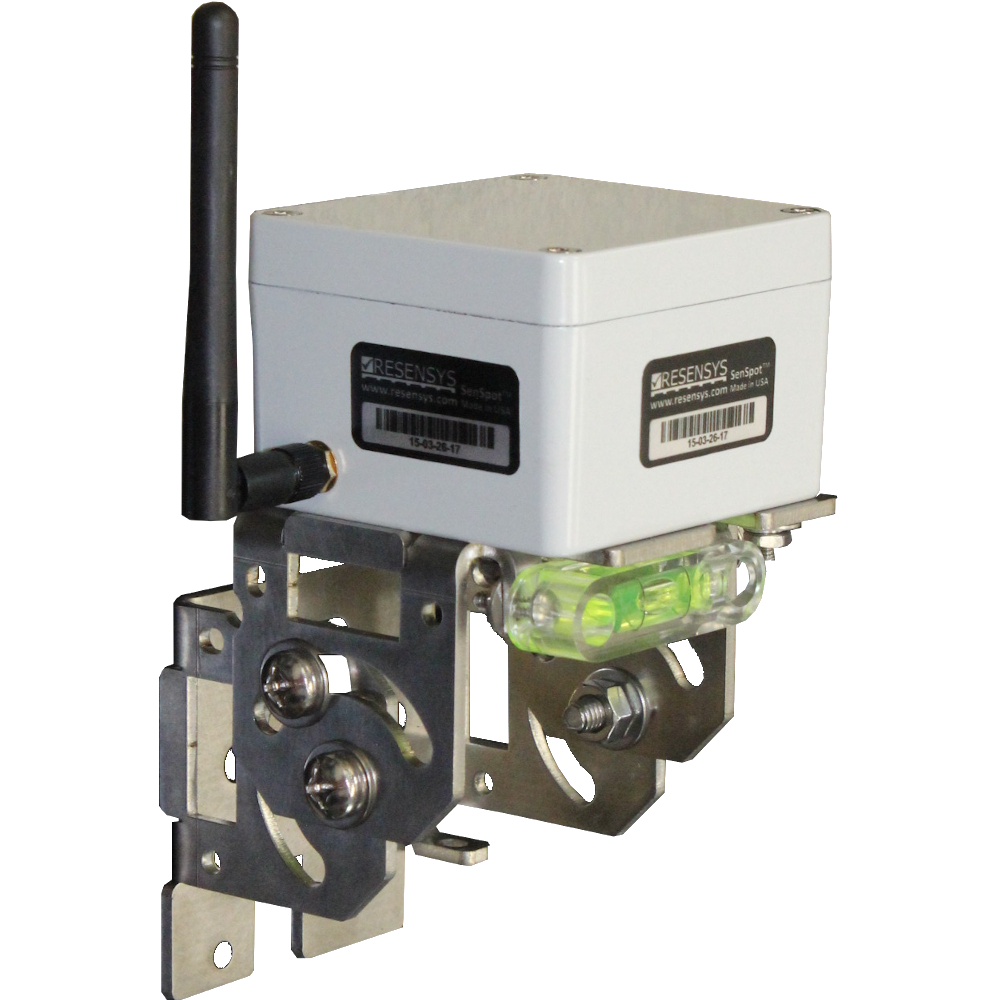
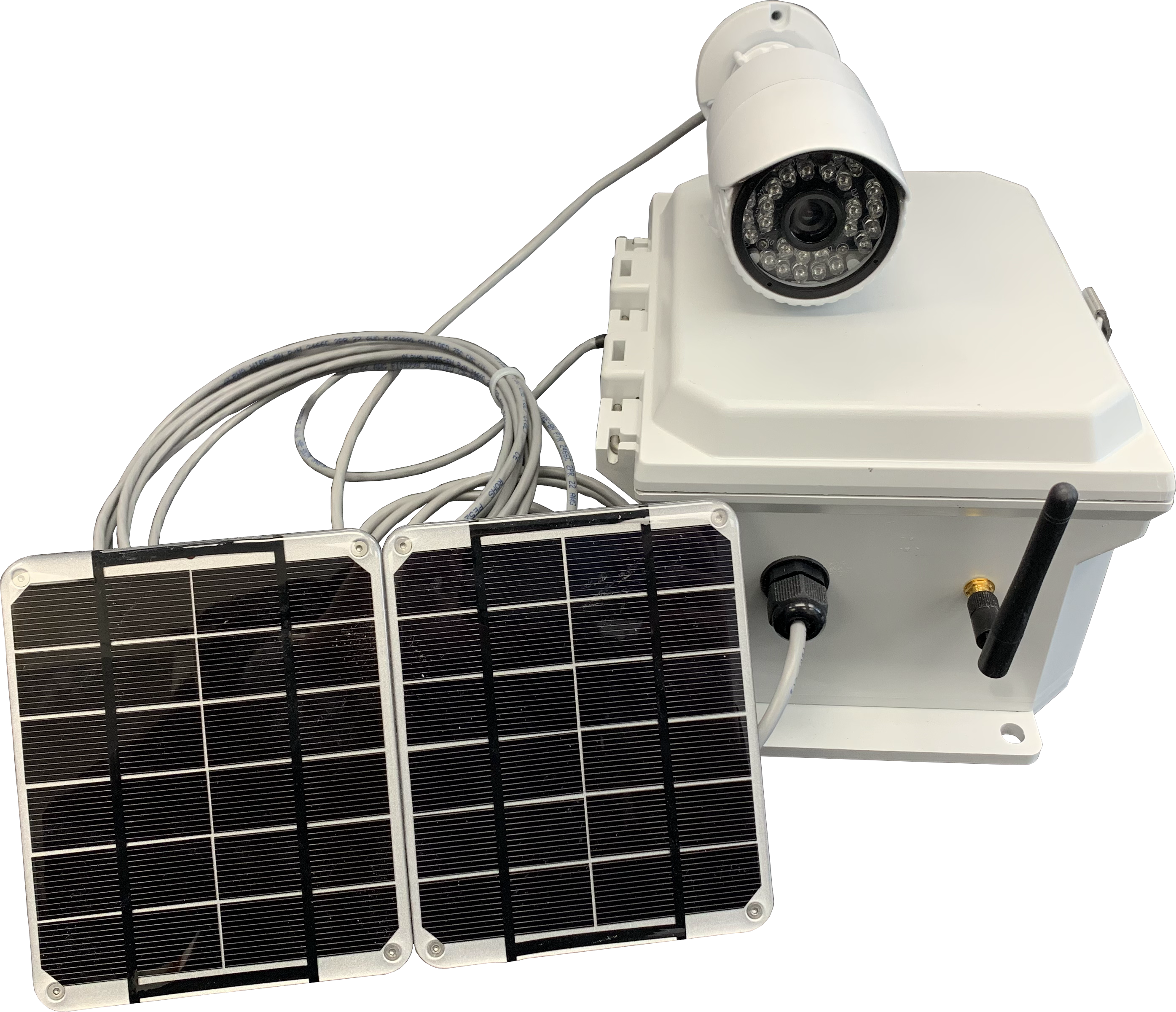
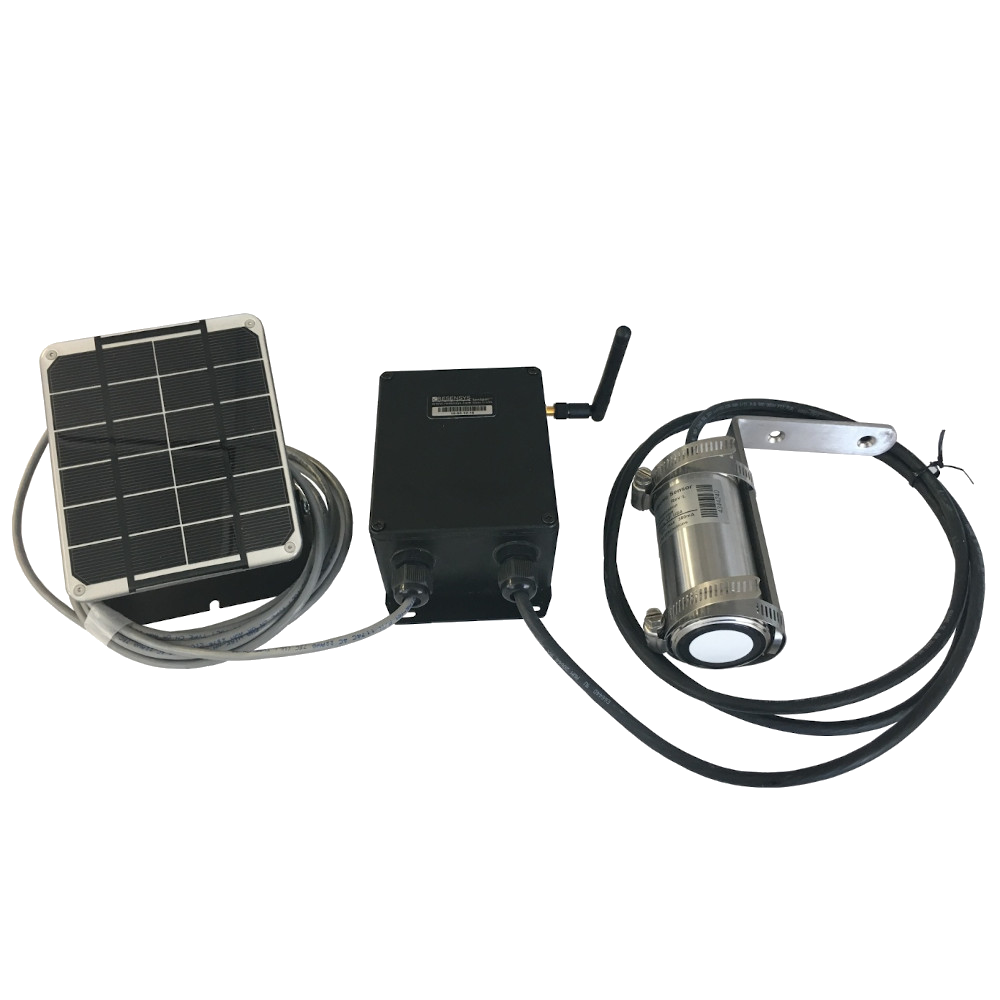
Our solutions offer a range of benefits that make monitoring more efficient, reliable, and cost-effective:
• Wireless Sensors and Devices: No wiring required, minimizing lane closures during installation.• Maintenance-Free Sensors: 10+ years of battery life without the need for replacement, maintenance, or calibration.• Easy Installation: Self-adhesive for steel or flange-mounting for concrete.• Small and Lightweight: Compact sensors suitable for various materials, including steel, concrete, timber, and composites.• Rugged and Weatherproof: Designed to operate in harsh conditions such as rain, snow, ice, high humidity, and extreme temperatures (-40°C to +65°C or -40°F to +150°F).• Long Communication Range: Wireless communication up to 1 km in free space.• High Precision Measurements:
1. Water Level Meter: High resolution of 0.1 ft (3 cm) for accurate water level monitoring.
2. Tilt/Inclinometer SenSpot™: Extremely high resolution of 0.00016 degrees (0.5 arcseconds) for precise inclination monitoring.• Infrastructure-Free: Battery-operated and energy self-sufficient, with no need for additional communication infrastructure at the bridge site.
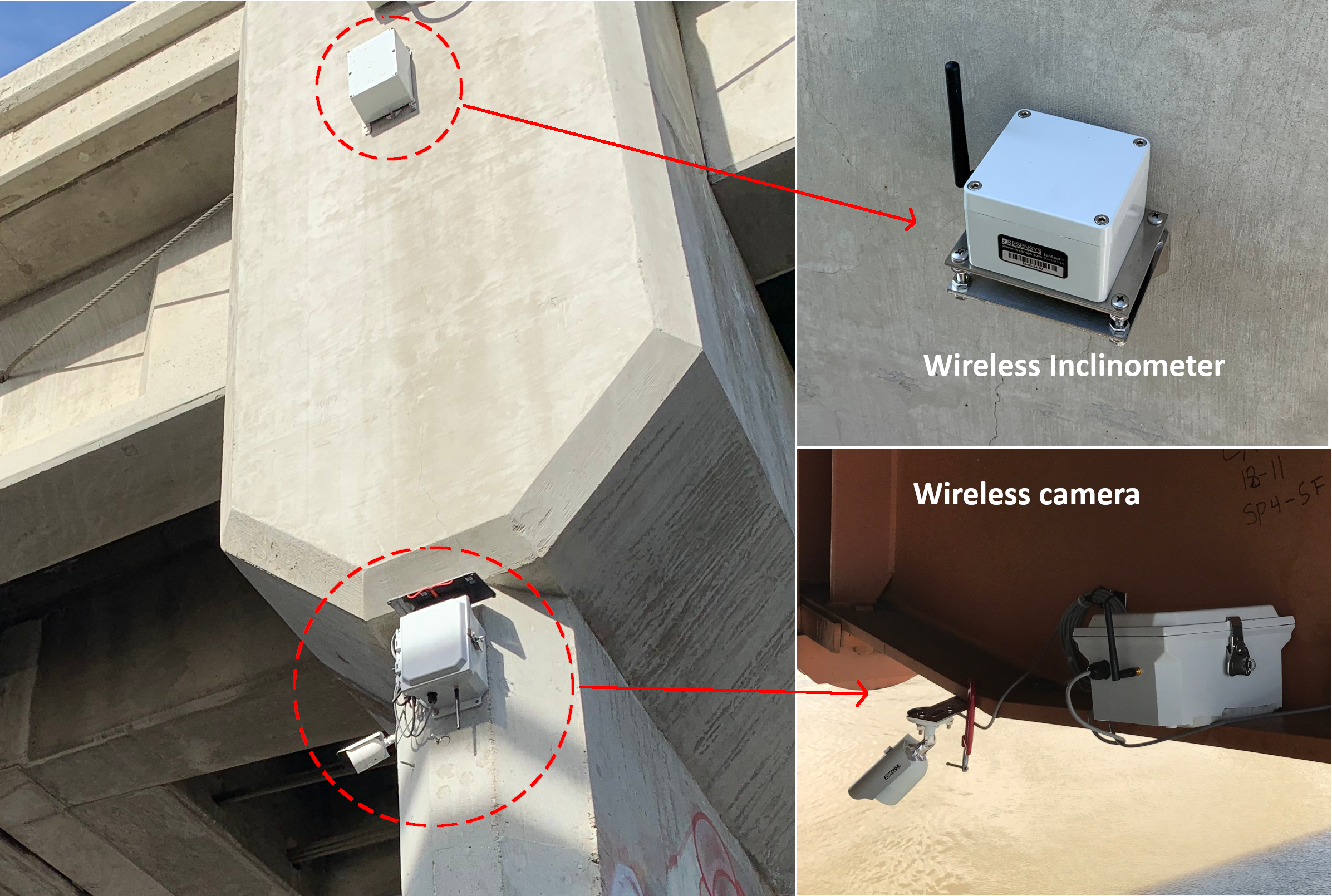
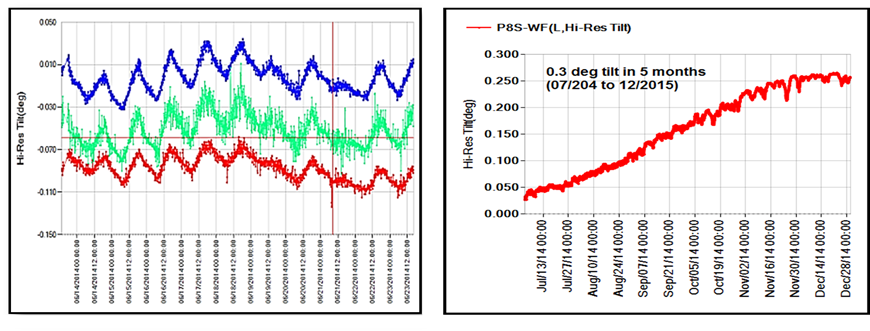
This system not only reduces installation costs and time but also provides real-time data critical for monitoring scour-prone bridges. The ultra-low power usage of Resensys sensors allows for both short and long-term monitoring, providing continuous safety.
Moreover, Resensys offers the option to integrate Wireless Solar Powered Cameras with the system. This combination allows for complete condition awareness through visual feeds, enabling quick assessments after severe floods and improving overall remote monitoring capabilities.
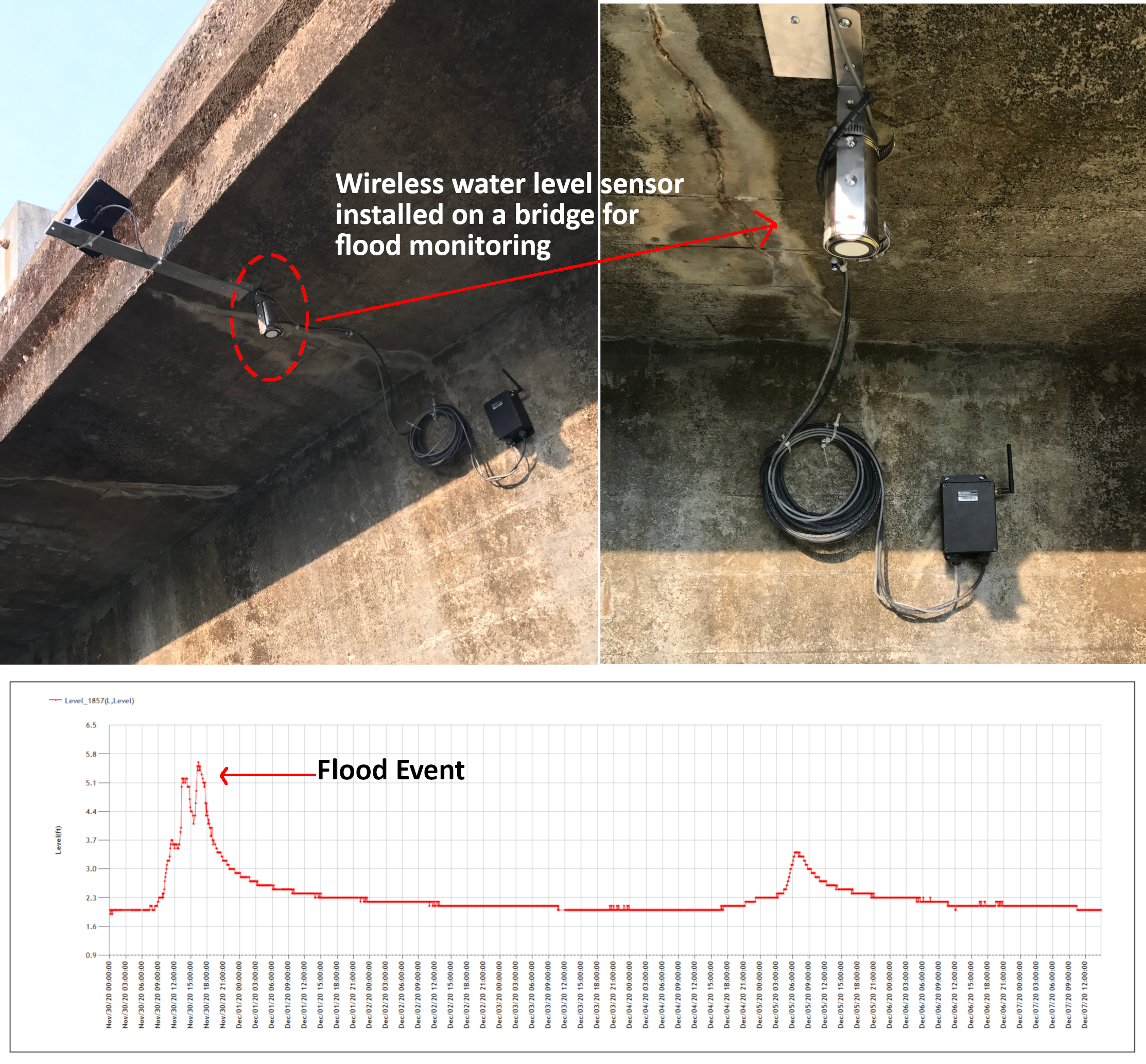
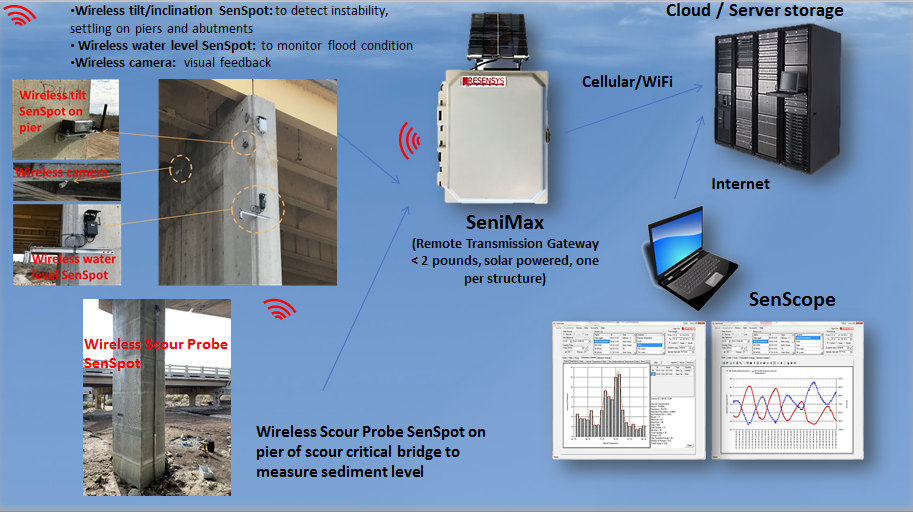
Our wireless monitoring system utilizes a combination of sensors to provide a holistic view of scour conditions:
Wireless SenSpot™ Sensors and Devices: These are strategically attached to scour-critical structural members. The number of sensors required depends on the bridge’s design, existing issues, and monitoring needs. Key sensors include:
- Wireless Tilt/Inclination SenSpot™
- Wireless Ultrasonic Water Level Meter SenSpot™
- Wireless Solar Powered Camera
SeniMax™: A wireless data logger gateway that collects SenSpot™ sensor data on-site and transmits it to a cloud database server via cellular or satellite networks. One SeniMax™ can support up to 100 SenSpot™ sensors within its communication range.
SenScope™: This powerful tool offers data analysis, visualization, export, automated alert management, and scour critical bridge data analysis. It also provides real-time alerts via email or text when pre-set thresholds are exceeded, ensuring timely responses to potential issues.
Contact Us today to learn how Resensys can enhance the safety and reliability of scour critical bridges with our advanced monitoring solutions.
The figure below shows a picture of a practical Resensys Structural Health Monitoring (SHM) system, which can be used for Scour Critical Bridge Monitoring.
 More Details

Bridge scour monitoring is the continuous measurement of sediment erosion around bridge foundations, piers, and abutments. Flowing water — especially during floods — can wash away the soil that supports a foundation. Continuous monitoring detects the structural effects of scour as they develop, instead of waiting for the next dive inspection or visual survey.
A complete scour monitoring system combines wireless high-resolution tiltmeters on piers and abutments (detecting rotation and settlement caused by undermined foundations, with resolution down to 0.0003°), sonar depth sensors and ultrasonic water level sensors (tracking streambed elevation and flood stage), and remote cameras for visual verification. Together, these provide a complete picture of both the hydraulic cause and the structural effect of scour.
Yes. The system continuously tracks pier tilt, water level, and streambed changes, and when any measurement crosses a predefined threshold, engineers receive immediate email or SMS notifications. During flood events, this enables data-based decisions — including bridge closure — within minutes rather than after the next inspection.
Scour develops invisibly, underwater, and fastest during exactly the flood conditions when inspection is impossible. Continuous monitoring provides real-time information about foundation movement and hydraulic conditions throughout the event, helping prevent unexpected failures, prioritize post-flood inspections, and extend the service life of bridge infrastructure.

Small wireless sensors that
make big differences
Address: 6517 Mid Cities Ave.
Beltsville MD 20705
USA
E-Mail: info@resensys.com
Phone: (301) 477 3075